Showing posts with label Italy. Show all posts

Friday, 17 September 2021

PARADISO PUBLICATION - It's coming


 PARADISO 

Its been eight years in the making but I'm excited to inform you that publication of the novel is in the pipeline. The projected date for release is July 2021.

I'll release more information as the process moves forward.

The story: Three hundred Italians sign up for a Frenchman's crazy scheme to establish a utopian colony in the Pacific. The destination, unknown to them, is Papua New Guinea; a remote location on the southern tip of New Ireland which even to this day is almost impossible to visit. It's  a disaster story, a story of hope, a story of survival and ultimately success. The story is told through  the eyes of brother and sister, Domenico and Marietta Perin, my distant cousins, half brother and half sister to my grandfather.

It is the story of my ancestors and their attempt to escape the poverty of Veneto in 1879.

It's a work of imagination based on true events.


Friday, 8 September 2017

A Venetian apology

 
Venetian Republic 19th Century
Trst/Trieste                    Slovenia/Italy

First I must make an apology to the Croatians, Montenegrins, and others living along the Dalmation coast who may have been affected by six hundred years of Venetian dominance.

To set the record straight I will remind you that in a previous post I suggested that the Venetians were more traders than raiders and therefore made less of a negative impact on the communities which they ruled. I have put this to a few locals and while the response has been mixed the general consensus has been that, yes, they were traders but they weren't without fault. neglecting infrastructure beyond what met their own maritime needs, and harvesting every resource available for their profit. In short their legacy was to leave the Dalmation Coast impoverished.

To this I would say, as a loyal descendant of a Venetian family: don't be too harsh; don't be too quick to judge. It was only 600 years after all, and everything occurs in some order. It was clearly next on their "to do" list.

The Venetians were indeed a maritime superpower. They traded the Mediterranean and dominated in terms of  naval and economic power. They brought Catholicism. Croatia is 98% Catholic. Interestingly neighbouring Slovenia, which is closer to the modern Italy and Venice, is today only 60% Roman Catholic. So they built churches. In some cases it seems that was an obsession. In the tiny centre of Perast in Montenagro they built twenty. One for every family? On the other hand they did bring with them a cuisine. Pasta, cured meats, sauces. Croatian traditional food is grilled meat, grilled vegetables and bread. Not much on the menu for the vegetarian I'm afraid.

The rich and powerful were out and about in the area for more than two thousand years. The Romans, the Ottoman Empire, Venetians, Austro-Hungarians. To an Australian that number is mind boggling.

Slovenia was under either Venitian or Austro-Hungarian (400 years) rule for 1000 years of that period. Luckily for them the Austrians valued Trieste as a port and were not much interested in the rest. The Triestians marvel that in all that time the Austrian royal family only visited once. It's not much fun being a minor state. Modern Slovenia has been left with just 43 kilometres of Adriatic coastline after Trieste was returned to Italian control in 1954. The poor Dalmatians, if it wasn't the Venetians or Austrians it was the Romans or the Ottomans making surfs of them.

But the Croatians have had the last laugh. For hundreds of years Italian, or to be more precise Venetian (remember there was no such state as Italy until the 1860s) was the lingua franca of the Dalmatian Coast particularly in Istria. Then along came Napoleon and vanquished the Venetians. Then the Austrians arrived for another 100 years, then WWI and the Italians again, then WWII and the formation of Yugoslavia and finally in 1991 Slavonia and Croatia became independent states. Croatian/Slavonian again became the official (well it had been since time immemorial actually) language, though Istria is officially bi-lingual (Italian and Croatian).

Italian is a strictly phonetic language with every letter sounded by way of pronunciation. So Trieste is pronounced tree-ess-tay (slightly differently in Venetian, which is still spoken in Veneto and Friulia Venezia Giulia - though different dialects in each region). The vowels are important and prounounced individually. So what have the Croatians done? They removed those precious vowels and left only the bare bones.

TRIESTE becomes TRST.

Take that you Venetians. You gave us vowels. We're throwing them back at you. We don't need them. They're a waste of space. Of course I exaggerate. Vowels are common in the Slavic languages its just that sometimes they disappear.

I can't fathom how that works but Andrea, who studied linguistics as part of her speech pathology training, says they sound the open vowel sounds within the consanent blends or something like that. But that's just a fascinating distraction.

In summary, the history of this region is replete with stories of invasion and ethnic rivalries. I'm beginning to get my head around recent events - the Balkan Wars etc but way too complex to summarise here. If you're interested there is a great BBC documentary on youtube titled "The Death of Yugoslavia."

ps

It's raining here in Zagreb as I write this and the temperature has dropped from 30 to 18. How dare it do that on our last day. We board our flight home tomorrow (Friday) evening. Farewell to Montenegro, Croatia and Slovenia. It's been a fascinating four weeks.

Friday, 15 July 2016

PNG 5 - New Ireland part 1


7am. Boarded John Lau's boat, "Stephanie" bound for the southern tip of New Ireland, home of the French/Italian colony of 1880 - 1882. Took my kwell tablet and held on tight.
John likes speed and he has a fishing boat that behaves like a missile. 150 metres from shore he gunned the 1500hp twin engines and we were almost tossed out the back (stern - boat terms now that we're heading into St George's Channel).
Port Breton, our destination (not called that now - or ever by the locals), lay two hours away. New Ireland was just a hazy undulating line on the horizon. I almost succumbed to  the lumpy, thumping ride but the kwells did the job and we were greeted by a pod of thirty spinner dolphin performing a welcome dance for us as we approached Lombon, the community of two thousand who live on the island at the entrance to the bay.
First impressions: tiny inlet; hardly worthy of the title "port"; dense jungle tumbling from steep slopes to the shoreline; no sign of arable land or a likely site for 300 settlers. What were they thinking? We seemed to be surrounded by a range of preferable options on East New Britain and north of this point on New Ireland. Even on Lambom Island which we now approached. John sounded our horn as we glided past the settlement, trying to attract someone who might be able to assist us; someone to act as our guides for the day. Immediately two canoes appeared from the sandy beach and approached us.
John invited three men on board and after an explanation of our needs, their spokesman, Digel, offered to accompany us. He proceeded to guide us to nearby English Cove (the south arm of a twin cove inlet) where he negotiated a powered "banana boat" and crew for us. Minutes later we stepped ashore at Irish Cove, the main site of the colony.
We were joined  by the traditional owner of Irish Cove and a retired teacher from English Cove who confounded all presumptions about traditional village life by sharing with us his knowledge of national politics, history and the local environment. Remember we were in a remote location accessible only by boat and four hours (by banana boat) from the nearest shop or service.
What did we find? A collection of 19th century bricks intended for the promised church; a foreshore skirted by a rough retaining wall (the Italians were dry stone wall masons) ; a fresh water spring which had been given a stone treatment to create a shallow resevoir;  a clearing containing a scattering of bricks in a format suggesting a couple of buildings had occupied the space; a large cast iron cylinder - probably part of a grinding mill for grain and the odd ceramic shard, a remnant of a water container or similar.
For the next two hours we were given a tour of the site. TBC

Tuesday, 12 July 2016

PNG 2 - RABAUL


It's the 8th of July. Day one of our trip to PNG. Weirdly that is the exact date 136 years ago on which the Italians boarded the steam barquentine, the "India", in Barcelona to begin their adventure.
    Kokopo, our base on New Britain is a dusty, run down coastal town a 25 minute drive from the  old capital Rabaul. Rabaul sits on an impressive harbour (Simpson's Harbour) with the quietly rumbling Mt Tavurvur close by. All that changed in 1994 when the volcano chose to remind the world of its latent power. Rabaul was wiped out, its houses and its array of impressive colonial buildings, links to its  past. Collaped sunder the weight of volcanic ash.


    Kokopo was the beneficiary of its demise. Overnight it became the new centre of business and government for east New Britain.
    Kokopo, largely lacks charm. As well as having lost its beautiful old colonial buildings through neglect or misfortune or redevelopment, it lacks a harbour and a genuine centre. Rabaul, though generally regarded as a ghost of its previous self by those in Kokopo, retains an impressive main street, a wide boulevard lined with frangapani trees. Its harbour has allowed it to survive as the import/export centre of east New Britain. It's a designed town;  designed by the Germans in the late 19th century as the capital of German New Guinea. Kokopo by contrast has grown around an access road which skirts a foreshore with no shelter. One long street with no plan. Since 1994 there has been money spent upgrading it to the standard of a provincial capital, with a new market, roundabouts and government offices but its never going to be a silk purse, always destined to be the sow's ear.

Monday, 4 July 2016

PNG 1 -

On Friday I head off to PNG for two weeks with brother Mick and friend Gabrielle Samson.

The first week will be in New Britain exploring the remnant history of the Nouvelle France colony and my Italian heritage. We
ll travel by boat to the southern tip of New Ireland to spend a day in the same jungle that Lorenzo and the Italians struggled to survive for three months in 1880.
The second week Gabrielle and I head to the Highlands, Mt Hagen, to explore her history. She lived there for a time in the 70s where her daughter was born. Were a little nervous but excited by the prospect of seeing the central highlands up close.. For Gabrielle it will be familiar but much changed. Hagen has gone from a village with one street to a town of 40 thousand. For me it will be an adventure into the unknown. A country so close and yet so little visited by us, Australians obsessed with Europe and central Asia.

Tuesday, 8 March 2016

Language in historical novels - Paradiso, Paradìxo, Paradise


Language in historical novels.

What possessed me to include Italian language dialogue in my novel? Authenticity? A fascination with language? Embedding the story in a culture other than my own? 

All true and manageable until I realised that the characters would not have spoken Italian but Venetian in 1879/80. More to the point they would have spoken a regional dialect of Venetian. How was I to respond to that challenge?


Three ways
1. I discovered an Italian/Venetian/English dictionary on-line which I used to do a rough version.
2. I asked Claire Kennedy and the Brisbane Dante Alighieri Society for assistance.
3. I sent a call for help to Marina Battistuzzi in Orsago (my great g'mothers village) in Veneto, Italy (I first met Marina in 1988 - a remarkable tale of three meetings over 28 years). Marina informed me that Orsago and the surrounding villages speak a
Trevigiano dialect (Treviso is the capital of this province) rather than a Venice based dialect. She offered to help.Today I received back six pages of translation and notes from her (I had sent her a cut and past version of all the Venetian passages in the novel - more than she expected I suspect). 

There are some subtle differences: papa is Italian pupa is
Trevigiano; thank-you is gràsie not grazie; Paradiso is Paradìxo etc Some words have clear roots common to English 'commode' is 'còmoda' for example and some words are spelt quite differently. Imbecile is 'inbezhilàt' in Trevigiano and 'imbecille' in Italian etc etc.I also discovered that the Italians and Venetians have a fabulous range of insults in their languages.

It has been a rewarding but tedious word by word process.

Friday, 30 October 2015

Writing Lessons Learnt


I have finished the second draft of Paradiso. What a great feeling. Two years of writing to date. Now to begin some reviewing and formatting before sharing it with some trusted readers. And then I'll start Draft III in the New Year. Another year to go I reckon.

Things I've learnt in the past two years. My top three.

1. A routine helps.
    I began writing at home and found that I was making many cups of tea, walking to the letterbox or checking the vegetable patch etc etc. Too many distractions for a procrastinator so I negotiated to use a room at the local bookshop and committed myself to write there three days a week averaging about four to six hours each day. It worked. I had company but I couldn't see them. I had coffee made by someone else, and I was around writers, though again mostly invisible to me for most of the day. My room has light but the window is frosted so again, one less distraction. It's a writing cave. I even disciplined myself to decline invitations from my mates to go fishing or play golf on those days. Thursday and Friday became my play days.

2. Keep writing.
        I set myself the apparently silly goal of writing at least one sentence each writing session. Why? It was easy to get sidetracked by the research process and follow the path of new information endlessly. The one sentence rule meant I could go home feeling I had added to the story even if by only a few words BUT it never stopped at one and even if it was 5:00pm, my knock off time, I'd often find myself there for another hour having lost track of the time.
      Secondly I decided that it was better to write badly than not write at all. When I was feeling lost or dejected or uninspired I just wrote. Sometimes it was pretty shit stuff but it did move the story forward and when i came back to it for the second draft the bones of the ideas had been laid out.

3. Writing teaches you how to write.
     Sadly or gladly the end of the book (at this stage) is better written than the beginning. I learnt stuff as I wrote, as I read, as I thought about writing and as I listened to other writers. Dialogue for instance. My first attempts were clumsy. Then, for a while, I unconsciously avoided dialogue and finally I started converting my narrated story back into dialogue wherever it was possible. It felt awkward at first - he says, she says etc but, on rereading the new stuff I realised that the combination of narration and dialogue made it much more lively, much more believable and much more interesting and the 'he says, she says' started to feel normal. No great revelation for experienced writers but a big step for me. Now I am acutely conscious of that balance in my writing andf in reading other writers. Some have the balance one way , some the other. It's horses for courses but in an historical fiction the temptation is to put in too much detail (all that research) when perhaps clues and 'mentions in passing' gives the reader more of an opportunity to build their own picture, create their own story.

I'm off to Laos and Cambodia for 3 weeks. Hopefully some stories will come from that trip.


Wednesday, 21 October 2015

Tim Parks "A Literary Tour of Italy"

Tim Parks

English writer/translator Tim Parks, who has lived in Milan for over thirty years, has just released a new book on Italian Literature, "A Literary Tour of Italy". He devotes a chapter each to a series of famous Italian writers or characters beginning with Dante. Quite a span and includes a few notorious figures including Mussolini and heroes Garabaldi but mostly writers. It was written as a series of essays but with the book in mind.

I have only known him as an entertaining commentator/observer of Italy but he's much more than a travel writer or an observer of Italian culture. Here's a link to a lovely piece he wrote for The New Yorker where he imagines meeting a series of famous authors including James Joyce, Charles Dickens, DH Lawrence and Thomas Hardy. It's a beauty.

http://www.newyorker.com/books/page-turner/imagined-meetings-with-joyce-dickens-hardy-and-lawrence 

I sent him the link to my piece on Italian Literature on the Avid Reader blog. He might even read it!

MIGRATION IS NOT NEW. - The Italian Experience

MIGRATION IS NOT NEW.
Families have been seeking better lives in countries other than their own for centuries. In the period between 1871 and 1900 (thirty years) almost two million people left the province of Veneto in northern Italy for other countries.

Veneto, the area which was once the Kingdom of Venezia, is basically a rural province and it was the "contadini" (the peasants) who fled poverty, turmoil and poor harvests for a better life. Today we might call them 'economic refugees'. 

Italy as a whole saw twenty million people emigrate in the period 1861 to 1941. That's the population of Australia (a further nine million since 1941).

"Emigration also became a highly profitable business. Unscrupulous agents, shipping officers and unscrupulous bureaucrats soon found out that there was a lot of money to be made from the misery of the migrant. Migrants were often forced to travel in appalling conditions. Yet despite untold suffering, Italians continued to migrate.'* They headed to North and South America (it is estimated that 50% of Argentinian nationals has Italian heritage), to northern Europe and in relatively small numbers to Australia.
Many returned to their native country - as many as two thirds, but many became citizens and intermarried and lived a new life, adapting to their adopted country.

* quote from "The Italians in Australia" G Cresciani (2003). Source of figures: "From Paesani to Global Migrants - Veneto Migrants to Australia" L Baldasar and R Pesman (2005).

Tuesday, 22 September 2015

Italian Literature - a taste.

I’ve recently returned from Italy. My third visit in as many years. The regular visits arise from my interest in exploring my Italian roots. This material has become the focus of the novel I’m writing. It’s also introduced me to some great writers.
There’s no shortage of people writing about Italy – how many more Italian travel memoirs can there be? The large number is understandable when you begin to explore the many layers of culture, history, food, language not to mention regional differences in this relatively small (compared to Australia) country.
ITALIAN WAYS
My first forays in my Italian obsession were via travel writers/observers such as Tim Parks’ Italian Ways and his marvellous Italian Neighbours. There are many others. Even George Negus wrote one – The World from Italy. I then explored some history and politics via David Gilmour’s The Pursuit of Italy and Australian Peter Robb’s Midnight in Sicily which exposes the role of the mafia in contemporary Italian politics. A great read.
I only began to read Italian-born fiction writers recently. The three of most interest to me thus far are Naples based Elena Ferrante, Sicilian Giuseppe Tomasi di Lampedusa and Italo Svevo from Trieste.
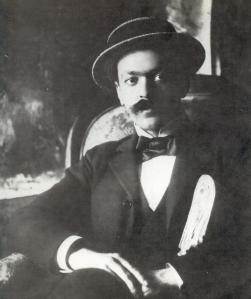
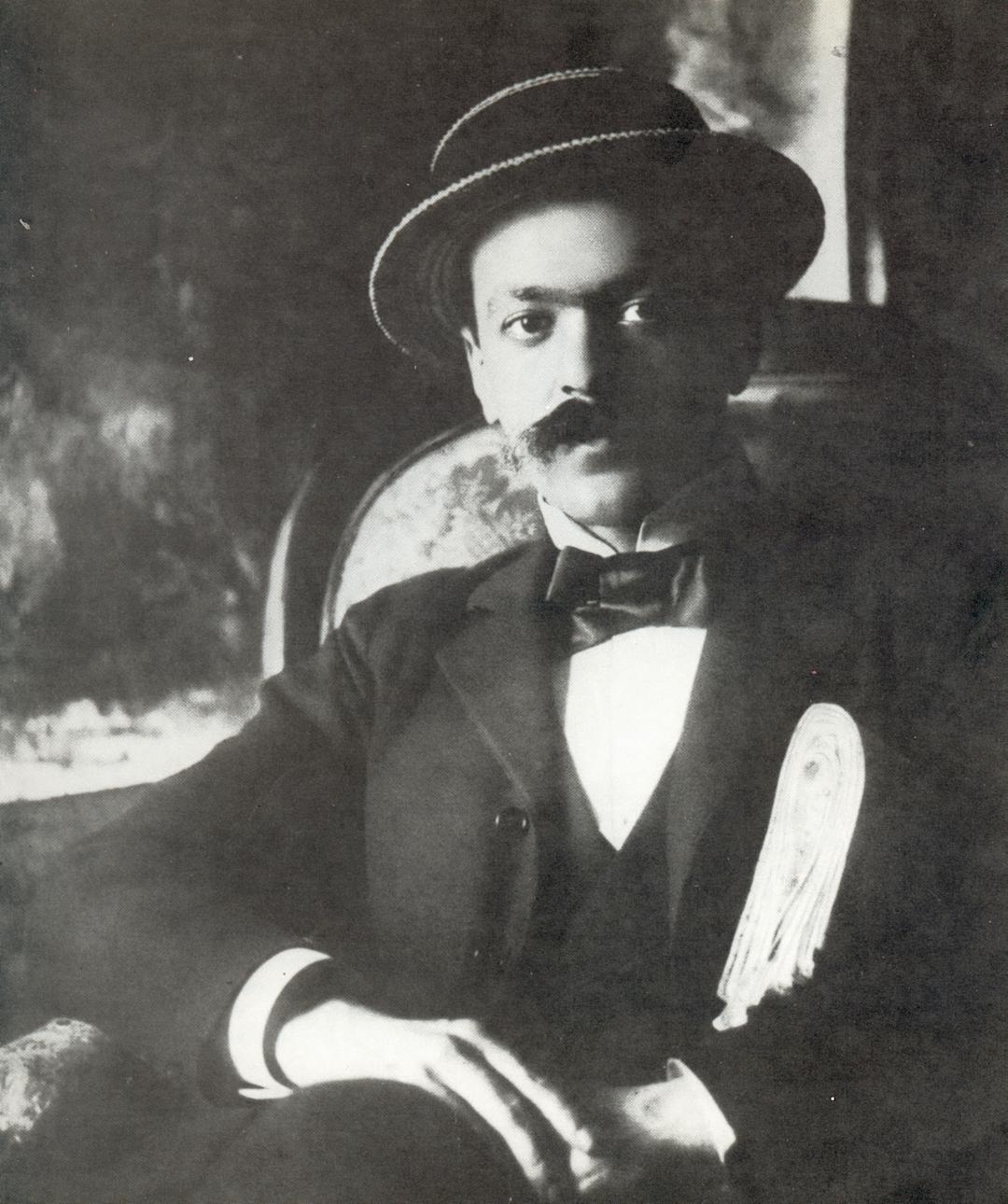
Italo Svevo, looking dapper.

These three are about as diverse as you could imagine. They explore dramatically different era’s regions and themes. Ferrante sets her stories in the poverty of Naples (what a wonderfully mad city) and her quartet of novels span fifty years from 1955 to 2005. Lampedusa explores Siciy between 1860 and 1910 and Svevo‘s novels are set in Trieste in the early 20th Century.

All three writers have fascinating personal stories. Ferrante is Naples born but has never been identified. She writes under a pseudonym. Lampedusa died at the age of 61, a year before his one and only novel, The Leopard, was published in 1958. Italo Svevo only achieved literary recognition and mainstream publication in his sixties (he died in 1928 aged 67). Svevo (born Aron Ettore Schmitz), by coincidence, also wrote under a pseudonym.
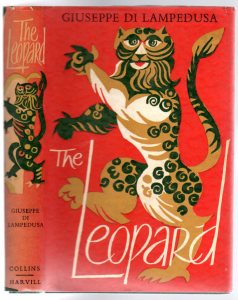
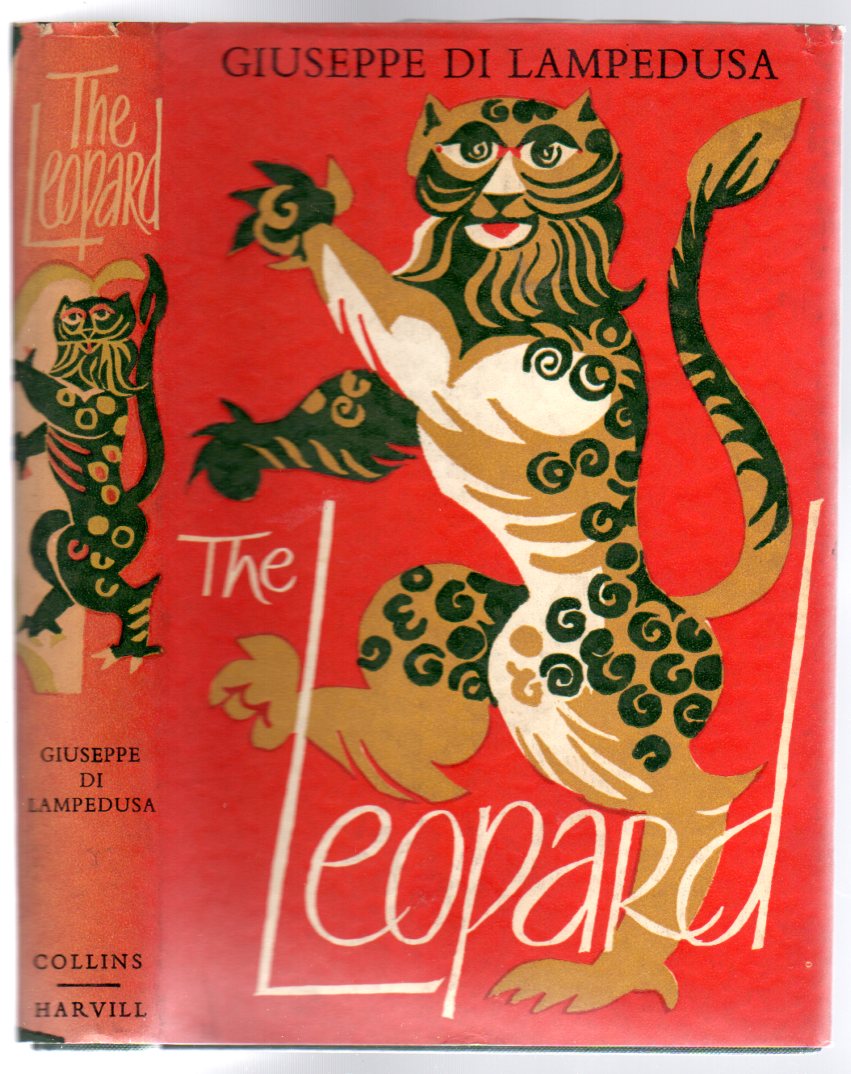
LEOPARD

Lampedusa was the son of an aristocratic family and The Leopard tells the story of the demise of the old ruling class as Italy moves towards a united country in 1860 (Gabaldi has just entered Marsala to begin his campaign). Told with an honesty and an acceptance of the inevitability of change, it tracks the decline of the House of Salina through the eyes of the Prince of Salina and the rise of his nephew, Tancredi, who opportunistically supports the new order and ‘marries down’ in marrying the beautiful peasant Angelica whose family is on the rise, thus securing his future. Written without sentimentality or nostalgia it offers a wonderful insight into power and humanity and to a Sicily still recognizable more than a century later. At its centre it is deeply poetic.

Svevo was also a late bloomer. Of German Jewish background (his mother was Italian), he was born in Trieste in 1861 and married into a business family (industrial paint). He wrote from a young age and self-published a number of novels in his twenties and early thirties but, achieving little success or recognition as an author, he stopped writing and devoted himself to the family business. It was not until his late forties that he again began writing. This occurred as a result of his chance meeting with a young James Joyce who came to live in Trieste as a twenty five year old and whom Svevo engaged to teach him English. Joyce lived and wrote in Trieste over a period of ten years where he completed Portrait of an Artist as a Young Man and began early drafts of Ulysses (Leopold Bloom is said to be based on Svevo). Joyce was long gone by the time Svevo again self-published his novel Zeno’s Conscience in 1923 but it was not until Joyce’s French agent published a translation that it was acclaimed as a comic masterpiece. Svevo died soon after (1928) in a car accident. Described as a pioneer of the psychological novel in Italy, it follows the life of a hapless young man as he stumbles into marriage, infidelity, business, all the time with a preoccupation with his health and death. Written as an account as told to his psychiatrist, it is a gently self revealing portrait of a character in constant conflict with himself. It is packed with wry humour.
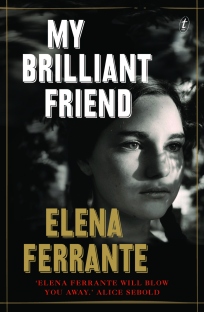
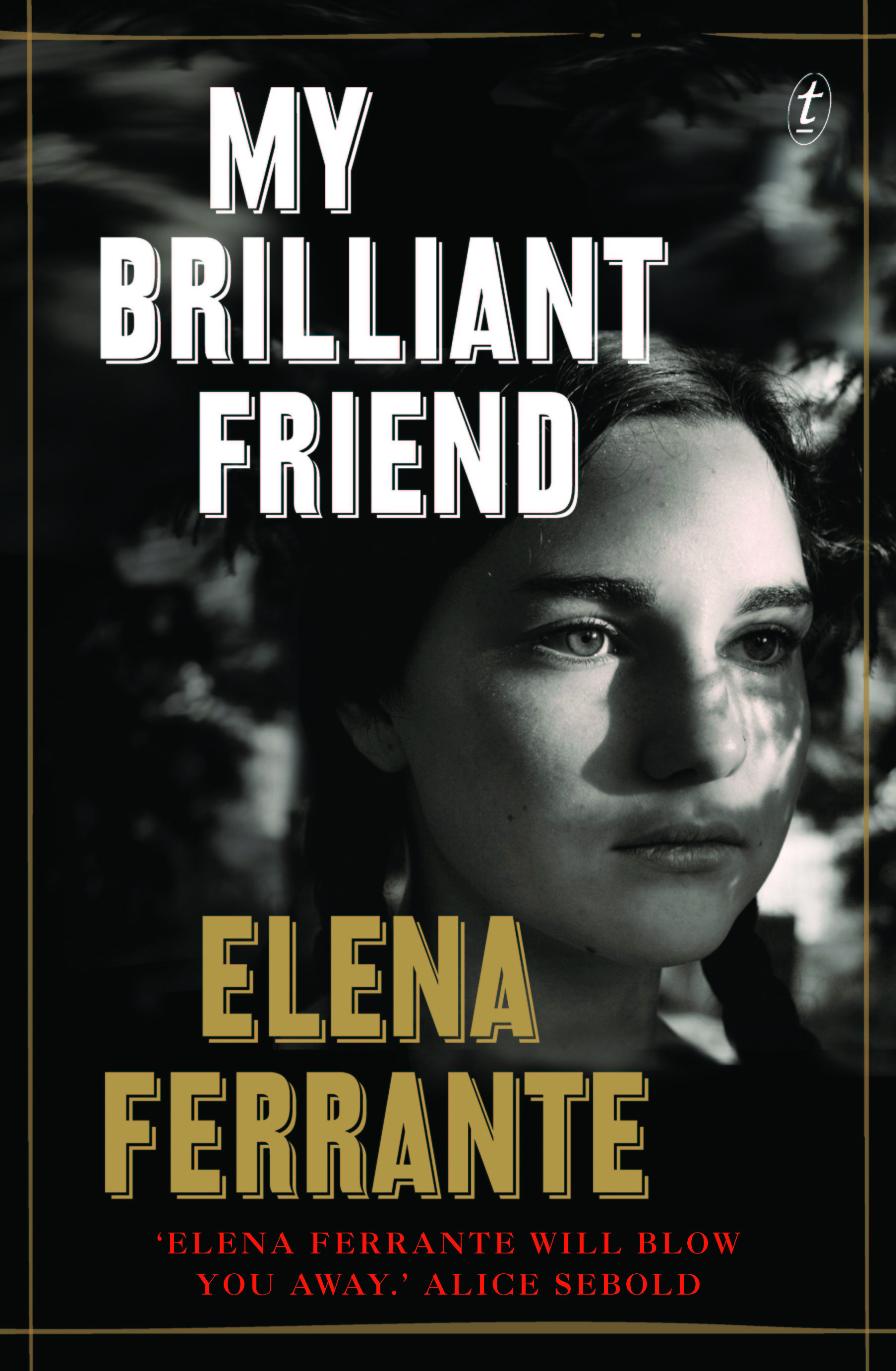
MY BRILLIANT FRIEND
Ferrante, the last of the trilogy of writers, writes about the lives of two friends Lila and Elena, one bright, beautiful and feisty, the other, highly intelligent but in awe of her beautiful friend. Set in the backstreets of Naples in the 1950s My Brilliant Friend is the first of four novels which follow this pair over a fifty year period. One is destined to escape her working class origins, the other becomes a survivor in a harsh social environment dominated by family. The writing in My Brilliant Friend is rich and sensual and beautifully captures the emergence of these two girls as they grapple with the realities of poverty, family and community expectations, and the constraints of gender in their journey towards adulthood and independence. The Italy of the fifties is raw and palpable.
Of course there are many more novels set in Italy – Hemingway’s A Farewell to Arms for one and our own Venero Armanno (The Volcano) another. Italy is such a great country and a country of many great reads.
© Steve Capelin 2015

The Novel - a reading from

Brunswick River - winter
Have not written here since my return from Italy but it doesn't mean I haven't been busy - including a couple of georgeous weekends at the beach.

Here's an update.

  • Wrote a review of Italian books I have read in the past while for the Avid Reader Bookshop website.https://avidreaderbookshop.wordpress.com/2015/09/09/italian-literature-a-taste/
  • Did a reading from my work in progress at Avid Reader as (part of) the support act to Gail Jones talking about her new book "A Guide to Berlin." Exerpt of my reading below.
  • Interviewed Shirley Barrett at Avid Reader about her new (first) novel, "Whale OH!", about whaling and killer whales and the Davidson whaling family set in Eden (NSW) in 1903. Very funny, touching, illuminating. Shirly has been writing and directing film and TV for the past twenty years (South Solitary, Love Serenade). This book began life as a script but she couldn't get the finance to make it so she has become a novelist. She was great to interview.
  • Have almost finished the second draft of "Paradiso". Its been a hard slog at times but I'm confident this draft is a big improvement on the first. Next draft will be even better.

Here's the piece I read at Avid. I chose a fairly quiet piece. I wanted to feel comfortable standing and reading in front of fifty people. I must say reading exerpts aloud is a great way to hear the writing clearly. I discovered that some of them were clumsy and uneven in places; in others the rhythm just didn't feel right; others were good but not stand alone pieces. It was an interesting and challenging exercise.


Ephiphany
Domenico

Papa looks at me and smiles and then looks at the bonfire which is now a raging volcano cracking and snapping as it accelerates towards its climax. I take his hand.

 ‘Look Domenico. Which way are the sparks flying?’ I look to the peak of the fiery mountain and see a spray of sparks explode from the top.

‘Which way is that?’ I ask pointing to the far side of the square. They are blowing away from us, neither towards where I know the mountains begin nor towards the sea, which I know lies to the south. ‘Is it Milano and the River Po in that direction?’ I ask.

I have learnt the geography of my country from maps on walls and views out my classroom window. Maestro Carros takes us out into the school grounds and has us face the mountains. ‘This is north,’ he tells us. He has us imagine we can see Venezia to the south. He teaches us north and south and then tells us that even further south lies Roma and the ancient civilizations. And further south still is the Kingdom of two Sicilies where Italians speak another language, eat different food and have black hair and dark skin.

To the north lies Austria and beyond the mountains, countries with many cultures and many languages until there is nowhere left to go. Only ice and frozen waste. Maestro Carros does not tell us much about the east except to say that if you go far enough you reach the lands of China and of silk and spices. And even further lie the islands of the Pacifique, undiscovered islands of mystery and magic.

He has never been east of Udine but of the west he has many stories.  He tells of getting lost in the richest streets of Milano, of travelling on steam driven trains between cities, of lakes as large as seas and of his own home, once part of Italy, now France.

‘Milano is west?’

‘Yes’ confirms my father.

‘So the sparks must be flying…’ and here I stop and face the invisible mountains and repeat my compass points mantra. If I raise my right arm it points in the direction of the disappearing sparks.

‘It’s east papa. They are travelling east.’

My father hesitates.

‘Another unproductive year with another poor harvest,’ my father observes. ‘The signs are clear. We will not be here to see another summer Domenico.’ He says this calmly. We both look towards Mamma and Marietta whose aprons swirl as they move between tureen and table, ladling out portions of hot soup. I wait, but there is no more information forthcoming. He pats me on the shoulder and pushes me towards the food.
Vecia has disappeared in the smoke and glare of the inferno. Someone calls out and we turn to see a flare of light as she is engulfed in flames and, for a moment, is lifted above the fire and she is gone. 

Saturday, 25 July 2015

For the Linguaphiles - Cape'in / Capelin / Capeƚin

At the family reunion in Italy we were being told that our name was pronounced Capelin (three syllables with equal emphasis all three syllables) and/or Cape'in. The locals insisted in pronouncing it in two ways one of which dropped the L which was very confusing. Well now I understand.
Cape'in is the Venetian pronunciation.
I've been searching for some Venetian vocab to use in my
book and yesterday came across a site devoted to the Venetian Language -
alphabet, pronunciation, dictionary etc all in English.

I had found a word that I wanted to use but it had this strange symbol in it ("ƚ" ) - so I was searching to find out how it would be pronounced and ..........

There are two versions of L in Venetian. One is the standard L of English and the other ("ƚ" ) with a line through it, has a sound which is described as between L and E (see below). So the Venetian spelling of our name would have been Capeƚin, the "ƚ" pronounced like a very breathy (aspirated) "hey" or perhaps an aspirated "ee" - Cape'in. Here's an exerpt from the Venetian alphabet and pronunciation website:
l same as English, "l" as in "lean", "lamb"
ƚ typical Venet, semi-vowel, pronounced between a full L and an E (without the tongue touching the palate)

Also in Venetian the "a" is pronounced as the "u" in "gut" so phonetically possibly Cup/hey/in or Cup/el/in rather than Cap/hey/in or Cap/el/in

Sunday, 14 June 2015

To my Brother


Love him. Always have. Sometimes close by, sometimes at a distance; sometimes forgotten in the midst of life and love and travel. He married and had kids, so did I. We lived in distant cities and towns and both ended up back in Brisbane.

It isn’t a blokey kind of love – beers at family BBQs or cheering on football teams, though they are there too. It’s a love as I imagine love should be. I love him and like him for all the best reasons and this trip has shown me all those more clearly than I’ve seen them since we shared that bedroom more than fifty years ago.

He’s easy to be with; we share a sense of humour; he’s generous with his time and his attitude. We share a set of values (I can’t imagine sharing meals with a narrow minded bigoted brother – we’re lucky brothers in that). We’re both forgiving of each other’s annoying habits (which neither of us can see as clearly as the other – did I mention that he snores? He’s in denial about that.) He would have something to say about my habits but he’s much more discreet than I am (he does hint at my eccentricities but doesn’t go into details). He does think I need a new hat. Mine is loved and battered; his is loved but cared for.

We’re not identical, not in the least. He notices things I miss. I can speak some Italian (through hard work and perseverance), he can intuitively read Italian signage. I come to the rescue with the vocab I’ve learnt and we combine to make sense of the world. He has a great eye for colour and composition (his photos and dress sense attest to that - my hat is a case in point); I have a facility with written language and speak of personal feelings. He is science and art, I am art and science. He has a good sense of direction, so do I but on this trip he’s been the navigator whether on road or on foot. I trusted him implicitly.

Only once did I get frustrated, though it wasn’t really his fault. He took us on the scenic route between Udine (lovely city) and Orsago (tiny village where my g/grandmother lived with her first husband for fifteen years  1865 – 1880). We squeaked along narrow roads in the foothills of the northern mountains (the lower Dolomites) until we were suddenly blocked.  The major road through a village was closed for the day for a cycling event. We re-routed and again the nearby village was also closed to through traffic for the same event. Mick tried this lane, that road, left at this fork, higher into the hills, across that bridge, all assisted by his girl Friday on his iPad. All to no avail. Alas we were forced to retrace our steps.

It was late afternoon. I was tired. I was over the idea of by-ways so when we got to the SS something which would take us to Orsago and he suggested we take “the scenic route” for the final Ieg I was not impressed. I remained calm and said: ‘Non. Directtore per favore,’ and off we went. That was our biggest disagreement in two weeks.

For my part, I am more inclined to be dangerously social at times – hungry for connections. It was my idea to knock on the doors of complete strangers in isolated villages in the vain hope of finding a familiar Italian face (and we did). Mick never hesitated to follow, documenting each encounter on film.


And so we are two but one. We are solid. For me this has been a great rediscovery of my brother. One which is timely as we enter our dotage. Heaven forbid, one day we might end up in the same old peoples' home together. I hope we would recognize each other and remember all this.

Brothers in search of others

Mick and I came to Italy with a vague plan and no specific expectations. An Italian meal with 500 people called Perin would suffice.

We did that on Sunday; met our Lismore cousins for the first time, found out that dozens of locals called themselves Perin/Capellin with various spellings for Capelin all variations on the word capello - hat. It was/is a nick name.

What followed on Tuesday was unexpected. I'd done some research before I left home- scouring the Italian white pages for familiar names in local villages. People who might be relatives of ours (Perin, Cappellin, Cescon, Lucon), Cescon and Lucon being the maiden names of Lorenzo's two wives (one died on the expedition). There were lots of names but only a few which also appeared on the international Perin family tree which local man Antonio Perin had created. Alongside the Perin name I had a couple of other clues to follow - names of villages from death certicicates etc. It was going to be a case of luck over science.

I'll share a couple of them with you.

1. Giuditta Lucon in Cimetta.
Cimetta is six streets. I had an address but it seemed to lead us to a factory site. We pulled up outside the obligatory church to check the map and noticed a group of men in the portico. ‘Let’s ask them.’ I said to Mick.

‘Scusi. Dove?’ I said and proffered the page I’d printed from the Italian white pages. Dove is my  overused opening phrase coming immediately after ‘Sono australiano, Parle inglese?’, my attempt to demonstrate that I’m making an effort and that I’ve probably reached my limit. This is usually followed by a stare of incomprehension at my mangled Italian. ‘Dove’ comes next – ‘Where?’ With the “where are we” and “I’m lost” as subtext.

‘Ah Giuditta. Si. Si,’ they chorused. She was clearly a well known to them. One of the group (who appeared to be engrossed in the process of restoring the interior of the church), beckoned for us to follow. I thought he was going to point us in the right direction but to my surprise he jumped into his Fiat Bambino and motioned for us to follow. Five hundred metres later he pulled into the drive of a two story house beside the factory. He got out and went to enter via a gate to the garden when a face appeared at the open window fronting the driveway.

She was in her late 70s and in the background a young man with down syndrome hovered. She was suspicious but the presence of Angelo helped allay her fears that she was about to be robbed. I have little idea of what followed but between Angelo and myself and Giuditta we seemed to agree that her name was Lucon and that we were seeking information about our great grandmother Maria Lucon. Angelo was the intermediary between us which was absurd as Angelo spoke not a word of English. She talked a lot. I think her mother may have been a Lucon or maybe her husband’s mother or her Auntie’s cousin might been one but she did have Lucon in her name and Italian women keep their maiden name often using it as a middle name.

Whatever, she had a striking resemblance to our Aunty Rita who was a generation closer to Maria. Both had what was once red hair, very fair skin and a chiseled features. Aunty Rita talked at a rate of knots as well. Maybe the DNA brings these remarkable elements through time? She offered us a drink. We said yes. And she served us a cold gingerella through the window and toasted us with one of her own.
Mick took lots of photos. We were both prepared to suspend disbelief and choose to believe that Maria Lucon was here in spirit. 

1.      2 . Egidio Perin (Motta di Livenza) and Sergia Perin (Chiarano)
On paper these two people should have been brother and sister, descendants of Lorenzo’s brother Fedele who stayed in Italy in 1880. They were in the right area and corresponded to entries in Antonio Perin’s version of the family tree.

Egidio and his wife were very welcoming but clearly not the Evidio we were seeking. Notwithstanding this misunderstanding which was sorted out within seconds, they still insisted on inviting us in for a coffee and a chat. Chat!? Well you know what I mean.
Feeling a little deflated we headed for Venice and only as we left Motta di Livenza did I dare mention to Mick that there was one more possibility. I hadn’t mentioned Sergia to him or if I had he was so confused by now that it had not computed. ‘Okay” says he. ‘Why not.’
I wasn’t sure what the point was. After all, Lorenzo left 135 years ago. What would I do if I found a direct descendant? Claim the inheritance? Remind Sergia that Fedele still owed Lorenzo that twenty Lire that he borrowed before they parted? Become pen pals? Promise to learn Italian so we might actually have a conversation?

Sergia’s place turned out to be around the corner from where we’d stopped for a lunch break. The postie gave us the directions. I rang the bell. Niente (nothing). I rang again…. A woman’s large round face (nothing like Giuditta) appeared at the window. She looked like we’d woken her from her afternoon nap. Not particularly happy to be interrupted. Her face (not unlike my Uncle Cyril’s large Irish visage) was framed by an arrangement of artificial flowers on the sill. Here we go again I thought. ‘ Sono Steve Capellin . Siamo Australiani.’ I said ‘Are you Sergia Perin?’ I asked. ‘Si’ she replied. Was your father Mario Fedele Perin?’ ‘Si” ‘And your mother Marcella Semenzata?’ ‘Si.’ I kept going now offering her the family tree as reference. ‘Si, si, si.’ She kept saying. ‘I know all these people’ she was saying. Which then became a flurry of Italian telling us where each of them now lived and who was living and who dead. We got lost, but we knew we had a “dinkum relative.”


I was convinced. She was too but she still had a sneaking suspicion that these Australians behaving like Mormon preachers might be part of some elaborate sting. Bingo! She softened. I was able to establish that we were not “primo” not “secondi” but third cousins. At which she disappeared inside and seconds later joined us in the garden her face beaming. ‘Caffe?’ Oh shit. We had left the best until last and had now run out of time. The rental car was due back in Venice at 4pm. It was now 2:30 and we needed to get on the road. ‘Grazie, non.’ A bit sad but maybe better to leave everyone wanting more than spoil it with a dysfunctional and agonizing half hour over coffee. Maybe I will learn Italian and return to explore the family connections further. I’d better hurry. Sergia is 77. Fit as a mally bull for the moment but who knows what will happen in the next few years.

 It did establish a couple of things. There were Perin/Capellins who survived in Italy and this was the right place - Chiarano and nearby Giarine are home to the clan. 

Beuno. Molte Bueno.

Tuesday, 9 June 2015

Oh Brother! Dolomites rule.

Took a drive to the Dolomite Ranges north of Orsago where we're staying. The day began in full sunshine and went from mild to wild to wilder culminating in an ice storm at 2000 feet which blanketed the roads in white snow and the temperature plummeted to 4 degrees in ten minutes. It was 32 degrees on the plains. Quite a day.The photos tell some of the story. They don't do the grandeur justice. We were gobsmacked. and not just us - people we met all said they'd never seen mountains like these - sheer cliffs 2-3000 metres rising abruptly and surrounded by deep deep ravines. Snow chais everywhere -  evidence of snow fields on every possible mad slope and beautiful villages in hidden valleys. Don't miss it if you're in the north of Italy. Kosciuszko Mountain by the way  is 2228 metres in height. We were driving at 2239 metres and were dwarfed by our surroundings.


ICE ON THE WINDSCREEN

Took a drive to the Dolomite Ranges north of Orsago where we're staying. The day began in full sunshine and went from mild to wild to wilder culminating in an ice storm at 2000 feet which blanketed the roads in white snow and the temperature plummeted to 4 degrees in ten minutes. It was 32 degrees on the plains. Quite a day.

Monday, 8 June 2015

More than brothers - An Italian Family Reunion

San Vandemiano, Treviso Province. Sunday 7 June 2015. Perin Family reunion.

I am exhausted. I am Perin. I am Capellin, or Cape’in. Today 550 people from Friuli and Veneto, Canada, Brazil, USA, and the biggest non European contingent – Australia, gathered to celebrate the extended family - PERIN. 

I was asked to carry the Australian flag in procession into the church where mass was celebrated in Italian, complete with a choir of thirty voices and a Brazilian priest who looked like brother Mick.  I went to communion (I’m not a practicing Catholic, is that a sin?) so I could receive a host from my somewhat priest-like non-brother.

Then followed a seven course meal served over five hours in a hall with no fans or aircon and the outside temperature approaching 35degrees. It all ran like clockwork.

Was it worth it – to come to Italy for lunch (as Andrea describes it)? Mick and I say emphatically yes. We now have a clear understanding about our family name. We were surrounded by people calling themselves Perin-Capellin. All insisting their name was Perin and their nickname was Capellin (from the word for hat - capello). The Perin-Capellin representatives (about 40 of the 500) came from Australia (Lismore in particular), Brazil and a large group from a nearby village named Giarine . We were told we should change our name back to Perin  - “Capellin is not a name. Perin is your name!”they said. "we are all Capellin but we are Perin." You can see how confusing it could be.

Highlight of the day was meeting our Lismore cousins for the first time – Elda (77 year old matriarch with boundless energy), her daughters Yvette and Sonia and their children and immediate cousins some of whom have lived in both Australia and Italy. It’s a long way to come to meet cousins who live 150 km away in Lismore but what a hoot. Elda, told the story of coming back to Italy in 1948 as a child and wondering why she was being called Capellin. Her mother explained the nickname concept (a sub group of the Perins) and from then on she understood. “We’ve always known we were Perin/Capellins. What took you so long? We all knew.” 

Sonia Elda Yvette
Elda arrived in Australia the 40s, returned to Italy in 1948 and then returned to Australia in the fifties. The other story concerned my Auntie Rita who worked with Sonia in Lismore and when approached and told that they were related refused to believe the Perin Capelin story. It took another thirty years to emerge.
We spoke of keeping in touch and perhaps a joint reunion of the two streams of the Perin clan in Australia (their great grandfather and ours (Lorenzo) were first cousins.
Switch to the music channel if this is too detailed. Family history can be tedious to those not part of the family.

The other delight was meeting second cousin Linda Spinaze (her father and our father were first cousins) for the first time. We spent 24 hours together. She and husband Roger stayed at the same accommodation as us in the tiny village of Orsago and, while Roger prepared his speech for the conference he was attending the next day, we three went hunting the back streets of Orsago for the family home of our great grandmother (Maria Lucon Tome - Tome was her husband’s name so it was his home we were searching for -  Italian women don’t take their husbands name, only the children take the fathers name. a custom not continued in Australia though Elda said “Why should we. I am a Perin always.”).


Anyway back to the search for the tome home. we had an address. We knocked and Amalia (age about 75) answered the door. It was the right place. We spoke for five minutes, neither of us understanding the other. She showed us a photo of her younger self and her brother and offered us a coffee “voluntieri” (my pleasure), We couldn’t figure out how we could sit over coffee with no common language so we were about to say goodbye when we were rescued by her son-in-law and his wife (Frederica Tome) who live next door (Amalia’s brother – Frederica’s father - lives upstairs - so Italian.  We exchanged email addresses, They are interested in family and we will follow up with some photos and family tree info. Cold calling works – sometimes. It was a great start to the day.

Linda Spinaze amalia Tome Brother mick

Casa Tome (Home of the Tomes)