Showing posts with label On writing. Show all posts

Friday, 30 October 2015

Writing Lessons Learnt


I have finished the second draft of Paradiso. What a great feeling. Two years of writing to date. Now to begin some reviewing and formatting before sharing it with some trusted readers. And then I'll start Draft III in the New Year. Another year to go I reckon.

Things I've learnt in the past two years. My top three.

1. A routine helps.
    I began writing at home and found that I was making many cups of tea, walking to the letterbox or checking the vegetable patch etc etc. Too many distractions for a procrastinator so I negotiated to use a room at the local bookshop and committed myself to write there three days a week averaging about four to six hours each day. It worked. I had company but I couldn't see them. I had coffee made by someone else, and I was around writers, though again mostly invisible to me for most of the day. My room has light but the window is frosted so again, one less distraction. It's a writing cave. I even disciplined myself to decline invitations from my mates to go fishing or play golf on those days. Thursday and Friday became my play days.

2. Keep writing.
        I set myself the apparently silly goal of writing at least one sentence each writing session. Why? It was easy to get sidetracked by the research process and follow the path of new information endlessly. The one sentence rule meant I could go home feeling I had added to the story even if by only a few words BUT it never stopped at one and even if it was 5:00pm, my knock off time, I'd often find myself there for another hour having lost track of the time.
      Secondly I decided that it was better to write badly than not write at all. When I was feeling lost or dejected or uninspired I just wrote. Sometimes it was pretty shit stuff but it did move the story forward and when i came back to it for the second draft the bones of the ideas had been laid out.

3. Writing teaches you how to write.
     Sadly or gladly the end of the book (at this stage) is better written than the beginning. I learnt stuff as I wrote, as I read, as I thought about writing and as I listened to other writers. Dialogue for instance. My first attempts were clumsy. Then, for a while, I unconsciously avoided dialogue and finally I started converting my narrated story back into dialogue wherever it was possible. It felt awkward at first - he says, she says etc but, on rereading the new stuff I realised that the combination of narration and dialogue made it much more lively, much more believable and much more interesting and the 'he says, she says' started to feel normal. No great revelation for experienced writers but a big step for me. Now I am acutely conscious of that balance in my writing andf in reading other writers. Some have the balance one way , some the other. It's horses for courses but in an historical fiction the temptation is to put in too much detail (all that research) when perhaps clues and 'mentions in passing' gives the reader more of an opportunity to build their own picture, create their own story.

I'm off to Laos and Cambodia for 3 weeks. Hopefully some stories will come from that trip.


Wednesday, 21 October 2015

Tim Parks "A Literary Tour of Italy"

Tim Parks

English writer/translator Tim Parks, who has lived in Milan for over thirty years, has just released a new book on Italian Literature, "A Literary Tour of Italy". He devotes a chapter each to a series of famous Italian writers or characters beginning with Dante. Quite a span and includes a few notorious figures including Mussolini and heroes Garabaldi but mostly writers. It was written as a series of essays but with the book in mind.

I have only known him as an entertaining commentator/observer of Italy but he's much more than a travel writer or an observer of Italian culture. Here's a link to a lovely piece he wrote for The New Yorker where he imagines meeting a series of famous authors including James Joyce, Charles Dickens, DH Lawrence and Thomas Hardy. It's a beauty.

http://www.newyorker.com/books/page-turner/imagined-meetings-with-joyce-dickens-hardy-and-lawrence 

I sent him the link to my piece on Italian Literature on the Avid Reader blog. He might even read it!

Tuesday, 22 September 2015

Italian Literature - a taste.

I’ve recently returned from Italy. My third visit in as many years. The regular visits arise from my interest in exploring my Italian roots. This material has become the focus of the novel I’m writing. It’s also introduced me to some great writers.
There’s no shortage of people writing about Italy – how many more Italian travel memoirs can there be? The large number is understandable when you begin to explore the many layers of culture, history, food, language not to mention regional differences in this relatively small (compared to Australia) country.
ITALIAN WAYS
My first forays in my Italian obsession were via travel writers/observers such as Tim Parks’ Italian Ways and his marvellous Italian Neighbours. There are many others. Even George Negus wrote one – The World from Italy. I then explored some history and politics via David Gilmour’s The Pursuit of Italy and Australian Peter Robb’s Midnight in Sicily which exposes the role of the mafia in contemporary Italian politics. A great read.
I only began to read Italian-born fiction writers recently. The three of most interest to me thus far are Naples based Elena Ferrante, Sicilian Giuseppe Tomasi di Lampedusa and Italo Svevo from Trieste.
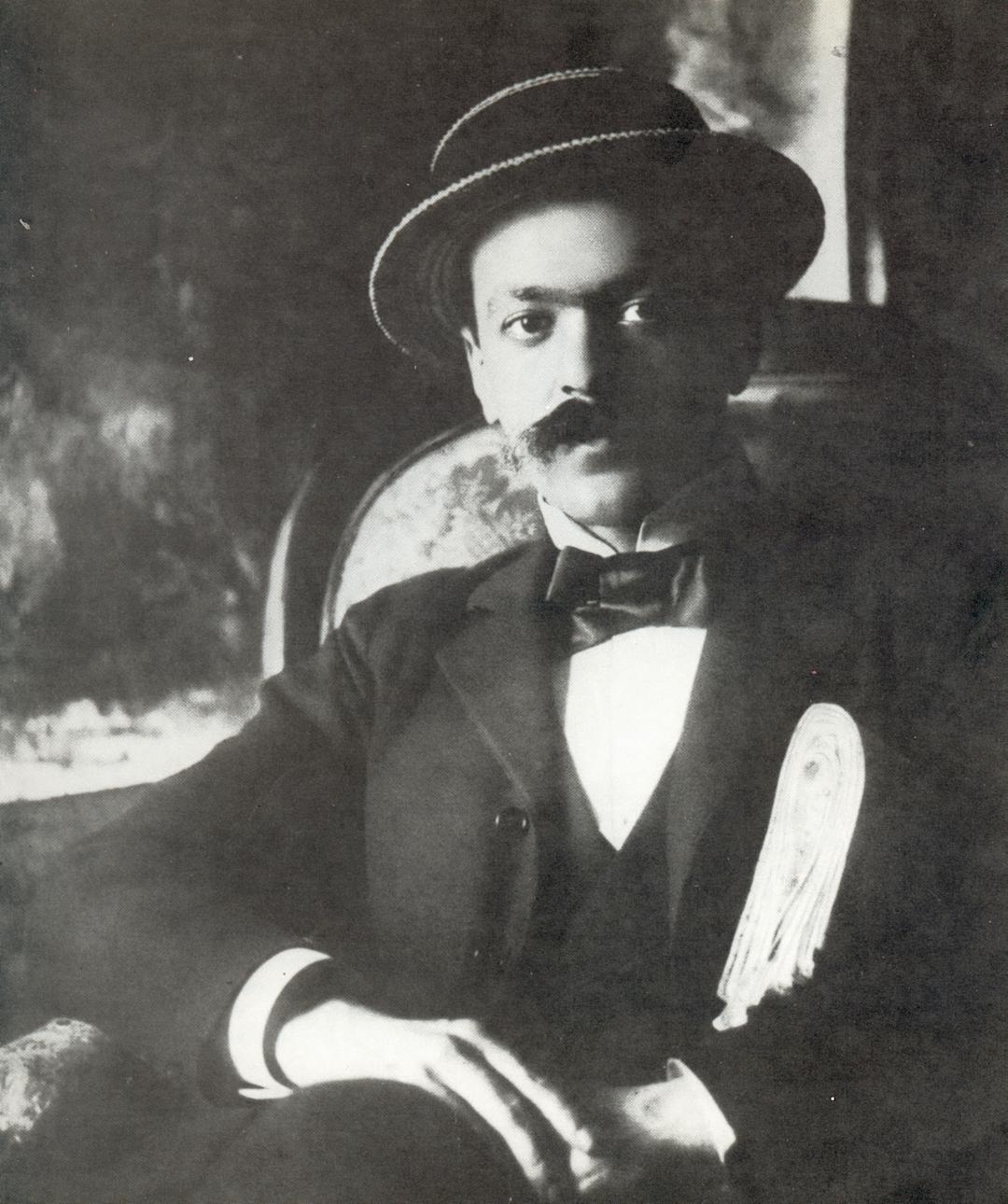
Italo Svevo, looking dapper.

These three are about as diverse as you could imagine. They explore dramatically different era’s regions and themes. Ferrante sets her stories in the poverty of Naples (what a wonderfully mad city) and her quartet of novels span fifty years from 1955 to 2005. Lampedusa explores Siciy between 1860 and 1910 and Svevo‘s novels are set in Trieste in the early 20th Century.

All three writers have fascinating personal stories. Ferrante is Naples born but has never been identified. She writes under a pseudonym. Lampedusa died at the age of 61, a year before his one and only novel, The Leopard, was published in 1958. Italo Svevo only achieved literary recognition and mainstream publication in his sixties (he died in 1928 aged 67). Svevo (born Aron Ettore Schmitz), by coincidence, also wrote under a pseudonym.
LEOPARD

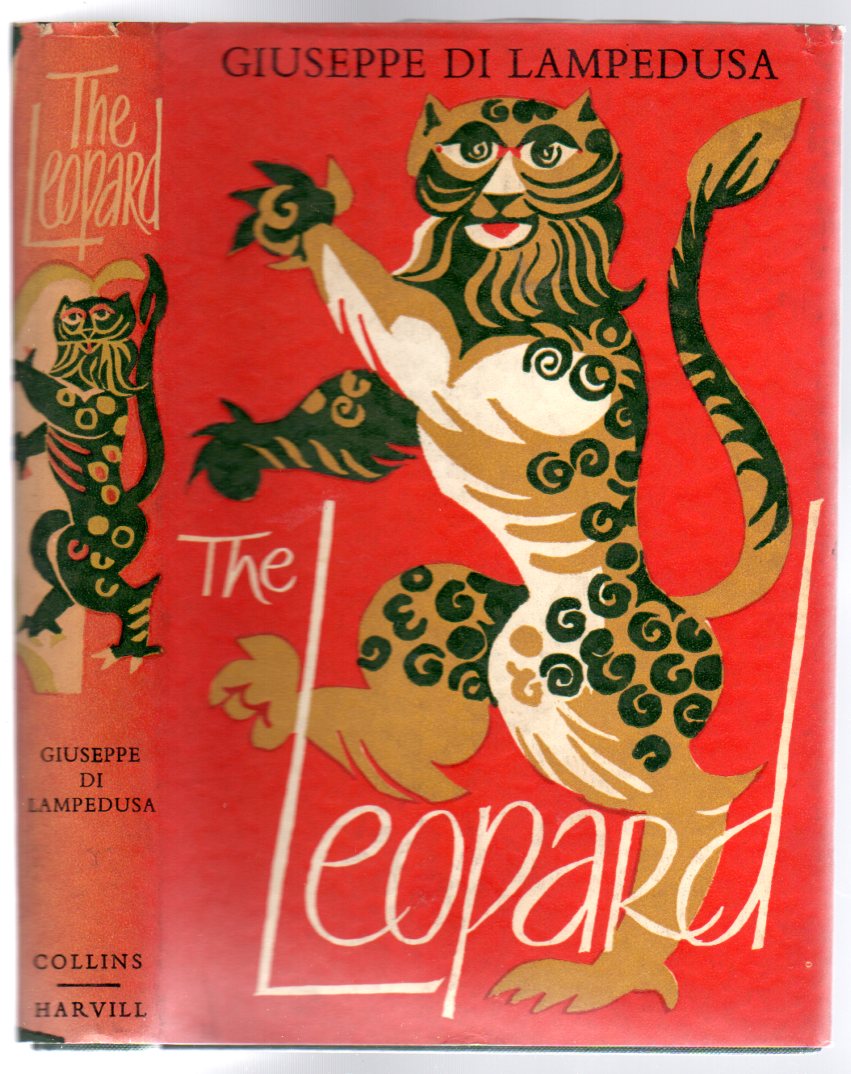
Lampedusa was the son of an aristocratic family and The Leopard tells the story of the demise of the old ruling class as Italy moves towards a united country in 1860 (Gabaldi has just entered Marsala to begin his campaign). Told with an honesty and an acceptance of the inevitability of change, it tracks the decline of the House of Salina through the eyes of the Prince of Salina and the rise of his nephew, Tancredi, who opportunistically supports the new order and ‘marries down’ in marrying the beautiful peasant Angelica whose family is on the rise, thus securing his future. Written without sentimentality or nostalgia it offers a wonderful insight into power and humanity and to a Sicily still recognizable more than a century later. At its centre it is deeply poetic.

Svevo was also a late bloomer. Of German Jewish background (his mother was Italian), he was born in Trieste in 1861 and married into a business family (industrial paint). He wrote from a young age and self-published a number of novels in his twenties and early thirties but, achieving little success or recognition as an author, he stopped writing and devoted himself to the family business. It was not until his late forties that he again began writing. This occurred as a result of his chance meeting with a young James Joyce who came to live in Trieste as a twenty five year old and whom Svevo engaged to teach him English. Joyce lived and wrote in Trieste over a period of ten years where he completed Portrait of an Artist as a Young Man and began early drafts of Ulysses (Leopold Bloom is said to be based on Svevo). Joyce was long gone by the time Svevo again self-published his novel Zeno’s Conscience in 1923 but it was not until Joyce’s French agent published a translation that it was acclaimed as a comic masterpiece. Svevo died soon after (1928) in a car accident. Described as a pioneer of the psychological novel in Italy, it follows the life of a hapless young man as he stumbles into marriage, infidelity, business, all the time with a preoccupation with his health and death. Written as an account as told to his psychiatrist, it is a gently self revealing portrait of a character in constant conflict with himself. It is packed with wry humour.
MY BRILLIANT FRIEND
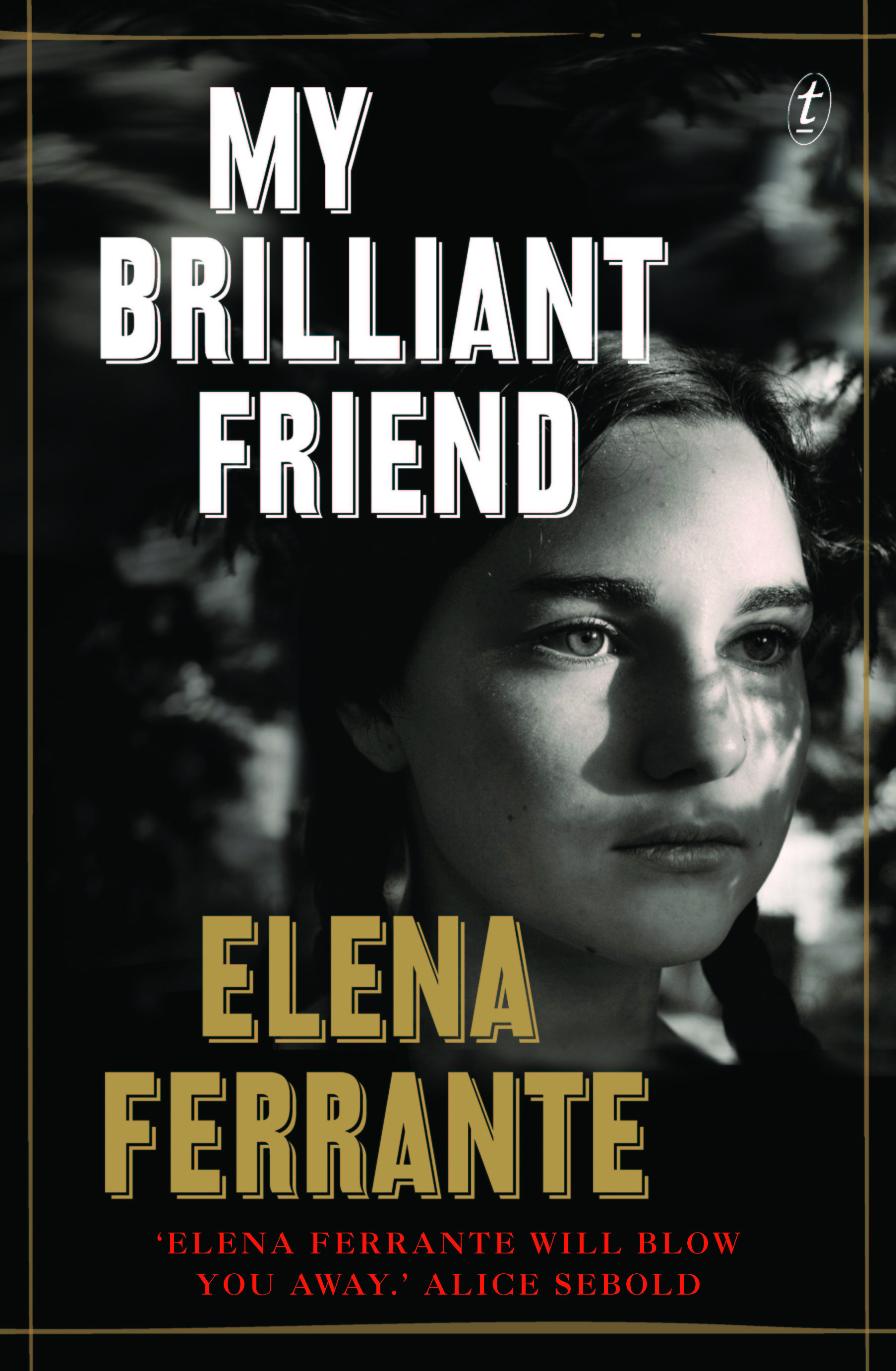
Ferrante, the last of the trilogy of writers, writes about the lives of two friends Lila and Elena, one bright, beautiful and feisty, the other, highly intelligent but in awe of her beautiful friend. Set in the backstreets of Naples in the 1950s My Brilliant Friend is the first of four novels which follow this pair over a fifty year period. One is destined to escape her working class origins, the other becomes a survivor in a harsh social environment dominated by family. The writing in My Brilliant Friend is rich and sensual and beautifully captures the emergence of these two girls as they grapple with the realities of poverty, family and community expectations, and the constraints of gender in their journey towards adulthood and independence. The Italy of the fifties is raw and palpable.
Of course there are many more novels set in Italy – Hemingway’s A Farewell to Arms for one and our own Venero Armanno (The Volcano) another. Italy is such a great country and a country of many great reads.
© Steve Capelin 2015

Wednesday, 28 December 2011

A Passion for Place

I picked up a book I've had for 10 or more years the other day. It was "About This Life', the autobiographical writings of Barry Lopez a North American storyteller and sage. He writes about the landscape and about people with an intimate knowledge of their land or their world. He moves from artic landscapes to intercontinental air freight and subjects them to the same incisive gaze and sense of discovery.

I was reading his essay "The American Geographies" where he grapples with the question of what is the land we live in? He sees that his country is often glibly represented by billboards and, in film by internationally recognised emblems of North America and he argues that this devalues the true nature of the landscape. He observes that true understanding 'resides with men and women more of less sworn to a place.' In saying that he also says that it's not an encyclopedic knowledge that these people have but a deep love and familiarity. They inhabit real spaces rather than inhabiting an idea of a place.

That got me thinking. I have an uncle Paddy like that. Every time I visit him in the Richmond River Vally where he was born he constantly talks about the weather and the river and the fish and hunting and seasons. It's as if he is a bird hovering above the land taking it all in. He can describe the route from his place to anywhere in the district as if by touch and feel rather than by street signs. Barbara Kingsolver does that in 'Prodigal Summer', the most remarkable book I've ever read. Everyone else in my circle loved 'The Poisonwood Bible' but I was captivated by her intimacy with the landscape and the people in 'Prodigal Summer'.

Barry and Paddy got me thinking. Thinking about what I'd read and written this past year. I realised that the books I most remember were set in places I knew or could know: "The Body in the Clouds" - Sydney; " All That I Am" - London and Germany between the wars; 'Spirit of Progress' - Melbourne. These are all Australian authors (I'm in a local Australian Authors Bookclub) but their stories are universal while specific to real places. I also read a series of books by young authors which were well constructed, well written and with interesting plots but, while they were set in recognizable landscapes, these landscapes were not named and the sense of place was not the same. I want to learn about a concrete world as well as a psychological world.

In terms of blogs, I've read less this year but the few I read I read regularly. On reflection I am drawn to sites which are grounded in place or accounts of place. Two of my favourites have been Sara Toa's 'A WineDark Sea' and Jennifer Morrison's 'Realia'.

Sara writes and photographs her fishing life and fishing community on the southwest coast of Western Australia. It's her writing I love. It is so true to daily experience. It is so deeply simple in the way she captures moments like launching a boat as the sun rises over the bay or loading crab pots or reading the weather. It's much more than notes about a good days fishing. Hers is writing with the intention of telling a story and capturing the reader in the moment.

Jennifer, similarly, captures moments in a very intentional way. Her moments are often about people she encounters on the bus or train on the way to work. Small observation of real life in Toronto, Canada. Jennifer teaches writing to adult groups and has a passion for storytelling and, in naming the streets and the destinations, she builds a picture you can step in to or could step into if you visited and followed in her footsteps. None of this is new. Writers have been documenting and capturing the world they live in since well before Dickens. I can still, forty years later, close my eyes and find myself in Steinbeck's 'Cannery Row'.

For my part I realised that my writing has also followed this path. I am more interested in writing stories of real experiences and real people than fictionalised accounts from my imagination. To my mind my stories are no less creative; the fundamentals of good storytelling are the same and that's where the craft and the creativity reside.

At this point my focus has been on my personal experiences and encounters I have with the interesting and absurd. Family and memoir has been a large part of my writing this year. It occurs to me that the landscapes that Barry Lopez talks about do not need to be the exotic; they could equally be the immediate locality, my community. How can I know my community and my local history better? What better way than to examine it, observe it and write about it.

I don't make New Year's resolutions but I'm hoping this idea might have a life beyond this immediate blog.

Happy New Year for next week.

Link to Barry Lopez on Storytelling

Friday, 16 December 2011

Starting Point

Is it possible to take inspiration from anything as the beginning point of writing a blog or a piece of creative/reflective writing?

Right now my toilet cistern is hissing at me. It's been hissing for a few weeks now as precious water flows constantly down the slightly stained porcelain walls through the S bend and on a journey ultimately to mix with waters polluted by poo and pee and other waste products.

Can I learn anything from this?

At the most practical level I have learnt that toilet cistern valves are not as easily sourced as I'd presumed. Two weeks later and a series of excuses and my local Tradelink plumbing shop still can't provide me with a simple piece of rubber. I could have flown to Malaysia, tapped a rubber tree, cured the sap and shaped a perfectly ordinary seal in the same time.

Of course I'd still be cursing and ruining the world on a number of fronts. One, the piece I would have made would be too big or too small or the wrong shape or too rough and I would have made no progress at all. Two, my trip to Malaysia would have added tons of carbon to the atmosphere and, so, more than counter balanced the good I am trying to achieve by stopping the leak. Three, let's leave three to your fertile imagination, because mine has run dry.

On the spiritual level I have learnt that acceptance of life's S bends, while challenging, can lead to an inner harmony and this, in turn, is good for one's bowel movements. I have also learnt that a calm reply and a logical account of progress to date can sooth the ire of those to whom saving the planet (not to mention the dollar cost of wasted water) is of paramount importance.

Finally, and there is always a final irony in most things (though I am told my friends in North America - the USA in particular do not get irony), my hissing toilet cistern has chosen to coincide its flush and flow with the release of tens of thousands of megalitres of water, not officially waste water, but certainly wasted, from the Wivenhoe Dam west of Brisbane to reduce its capacity to 75%.This is a precaution against a possible repeat of the January 2011 flood which devestated the community.

Are my efforts in vain. Can one person's cistern make a difference? Is the Kyoto protocol wasted on me? Did it ever get signed? What has waste water got to do with global warming? Answer: it can help keep things cool - for a while?

And to answer my opening question: The answer is yes. But the value of the result may very likely be questioned.

Tuesday, 31 May 2011

Me and My memoir


I've been busy getting my memoir, "In Search of Lorenzo", under way over recent months. I'm learning a lot. Fast. Each day. I started doing what I promised myself I would. Write write write - without too much editing. Not only did I succeed in minimising editing, I also managed to minimise any planning.


The second stage has now kicked in. Trying to conceive how this complex story will be told in a cohesive but entertaining way. I've discovered that writing short stories is a doddle compared with developing a more complex and full length narrative. Themes, sub themes, present, past and unknowns conspire to do my head in. In addition, some facts just seem to get in the way of a good story. I'm having to curb my tendency to make things up when faced with contradicting information.

I'm making some headway due to a few factors. One is I'm enjoying the detective work - which I thought would be tedious. Au contraire, there are so many contradictory pieces of information I feel like I'm in the jury room dealing with a complex crime scene, trying to sift fact from fiction and put disparate pieces of information together to make sense. Who should Zi believe? Two, I've allowed myself to inject some literary devices, even created elements, into the narrative. When I can't have been there in 1880 and neither was any other member of the family I'm faced with writing nothing or creating possible scenarios which try to capture some elements of the conumdrum facing illiterate peasant Italian migrants (who probably didn't even see themselves as Italian, given that italy didn't exist as a nation until 1861).


The other great help is attending a writing workshop.


Iattended the second in a series of four last week and had a couple of lightbulb moments. Nerida got us to write three beginnings to our work - one from a character perspective, one from a descriptive position and the last taking an element from the middle of the narrative and bringng it forward. That was liberating and I'll use all three somewhere in the memoir. We also discussed structure and tension which is fine if you're writing a fiction novel where you are in total control of the events. In a memoir based on facts, the challenge is where do I find the tension. How do I make each section, each chapter, build to a climax or at the very least overcome some obstacle on the way to the finale. Tough but exciting.


So without wanting to bore you to tears here is a sample of one of the beginnings I wrote at the workshop which I have used as the opening in this early draft.


In Search of Lorenzo
Going Home
I
‘Should we get on with it?’ My niece has a deadline to meet. She needs to navigate the rough dirt track to her hippie caravan in the mountains before dark. That’s a two hour drive away in the ranges behind the Tweed Valley.
‘It won’t work here’, comments my aunt. ‘The wind’s in the wrong direction. The ashes will blow straight back into our faces. There’s a jetty on the other side that might work.’
‘I don’t want you to put poppa in the river’, says my daughter from the back seat of the car where it’s warm and where she’s lying prone, the victim of an early winter flu. ‘That’s all I’ve got left of him. Can’t we keep him?’
There are seven of us here on Kev’s anniversary a year after his death in 2007. We plan to return him to his beloved Richmond River. We are upstream from his old family home; cane fields mark the other side of the river and beyond that the Pacific Ocean attacks a wild windswept coastline.
I want this to be meaningful. This man was special. I want to watch my father’s ashes drift downstream ten kilometers to Ballina where they will mingle with the salty waters washing the headland and beaches, home to the prawns which the locals have made their icon. The home of ‘The Big Prawn’.
This is a key step in bringing Kev home and resolving his conflicted relationship with his Italian and Irish heritage but we can’t seem to get it right. The picture I have in my head doesn’t match the reality of this day. This bit of the story is every bit as hard to put in place as every other piece of the puzzle spanning the preceding one hundred and thirty years.


II
In 1880 Tom Kilcoyne was preparing his family for escape from the 1879 famine sweeping through County Mayo in Ireland destined to join the tens of thousands of refugees heading for Australia for a new life. In Veneto, Lorenzo Perin had joined a group of local peasant families who had invested their life savings in a scheme which promised them a slice of paradise in the South Pacific. Thomas and Lorenzo were my father’s maternal and paternal grandfathers.


III
In 1980, in a small war service home in Brisbane, my father was preparing to embrace his Italian heritage publicly for the first time. He was fifty nine. The shame of growing up Italian was about to be expunged. He was about to travel to northern NSW, his ancestral home, to celebrate a little known, yet dramatic, event in Italian/Australian history.

Saturday, 6 March 2010

Magpie Tales A Reflection

The Magpie Tales series continues. Each week an image is offered as a jumping off point for writers of fiction, poetry, fantasy, commentary, crime. You name the possible destination, it takes the 40 odd writers there each week. It all emanates from Willow of Willow Manor. Her site is worth a visit and her subsite Magpie Tales is the engine behind these stories.


For me this exercise has brought me into the midst of an instant community of writers (none of whom I have or probably ever will meet); it has become a discipline and a challenge to keep thinking about writing; and it has brought many potential readers to my writing. (A writer needs an audience). This group is not only audience but also offers support, critique (gentle thankfully) and a sense of magic - the affirmation of life via a network of strangers all seeking to put their creative contributions front and centre.

So this is the next image. As usual I am flummoxed.

The last image, the 1KG weight had me stumped. I get stuck on the concrete image and have to wait and wait until the deadline forces me beyond the obvious and into another mode. Last week it was my days as a teacher which emerged; the week before the Victorian bushfires. This week. Oh gawd here we go again.


I'm sure every contributor is having the same experience. last week the 1KG was everything from a doorstop in a house of ghostly memories, a talisman in a fantasy, a story with a pun on Weighting for Godot etc etc.......... and it was also the trigger for a beautiful poem about the soul which was offered by Willow who herself is the high priestess of this writer's site. Here it is:

Dead Weight

What separates the living
from the dead?

I've heard it said
a few grams
of something
measurable

leaves the body
at the point
of death.

A minuscule weight.
Heavier than air.
More than
that last breath.

What's there?
Where does it go?
When does it start?

Can human scales
detect the absence
of a soul?

Is the sum
of our parts
less than the whole?

willow, 2010


Sunday, 8 November 2009

Chipbark Fashion Bravery

Sunday. Carted 20 barrow loads of chipbark from the front yard to the back yard this morning. The two year front fence project is almost complete. The neighbours were starting to talk. One has even moved to a new suburb. I can't be sure it's because of our footpath chaos but my guilt feeds my paranoia. I have now created 20 new opportunities for the local brush turkeys to destroy my backyard.


Celebrated by visiting GOMA (Gallery of Modern Art) to see the 20 year retrospective of the Easton - Pearson fashion design collaboration (still going strong). Wow, have they had a great time? 20 years of dreaming up fantastic designs and watching them be created in India, China, Brisbane... Yes they still manufacture some of their pieces in their home town. While there was lots of stuff I couldn't relate to I was impressed with their bravery. They just take their ideas and go for it. Andrea loved it and drew my attention to the two early Easton/Pearson pieces she has - News to me! I drew her attention to the fact that Lydia Pearson swims her Saturday laps in the lane next to me at the local pool. One all.
http://www.eastonpearson.com/home click on image above for link.


Confidence and bravery. Two great characteristics for anyone to embrace.
I am pussyfooting around about working less at my Council job and giving myself more time to do other things. Like writing, photography, having coffee, going to galleries. What's holding me back? Fear of the unknown. Loss of connection with people and work I love?

On the other hand what would a brave decision deliver me. The next phase in my pattern of reinvention. By my calculations my working life has been a series of seven year adventures - 1. Uni and Canberra Public Servant - Bureau of Census and Stats (1967 - 1973)(Luckily I failed a year at Uni otherwise the pattern would have been ruined from the outset) 2. Teaching primary school (1974 - 1980) 3. Working in Community Theatre companies (1981-1987) 4. Teaching drama at tertiary level (1988 - 1994) 5. Community Arts Worker with Brisbane City Council (1995 - 2001) 6. Team Leader of Councils Youth Team (2002 - 2009). Hmmm overstayed my last one by a year. Is there a message in that?

PS I got an email from a young man I taught in 1980/81 at Ascot State School - my last year of teaching before running away to join the circus. He'sd heard me on Life Matters. He remembered the year as one of his fondest. We did lots of arty stuff. He has gone on to be a professional musician, one half of the jazz duo Stringmansassy, for those who know the Brisbane music scene. He's now teaching music in Bathurst. Teaching, its a great career. One learns so much about people and communication. And sometimes you make a difference.

http://www.myspace.com/stringmansassy click on image for link

Sunday, 1 November 2009

Life Matters


Welcome. Old and new visitors. I had the opportunity of speaking to Richard Aide on the Life Matters program on ABC Radio on Tuesday.

I was their "Meet the Listener" guest for this week. It's a great concept. Everyone has a story to tell and by profiling ordinary listeners they unearth the hidden stories of people's lives which are every bit as rich and often more authentic in their simplicity than the celebrity list that gets done to death.

And thus here we are on my blog: "My Missing Life'. Quite apt really as the inspiration for this blog has been to capture simple stories from the present and the past and tell them in a story format rather than as a journal.

Why? I like writing and it's a challenge to take an ordinary memory or incident and try to capture its essence. I reckon sometimes I do it well and other times I miss the mark. But that's the risk and the excitement. When it works its mesmerising and surprising and even when it doesn't I learn something. So what might you find on this blog?

Family stories -
1. "Journey" (March - June 2009) - The amusing and touching tale of taking my father's ashes back to his home village as the final homage to a simple man.

2. "That Ordinary House" (December 2008 - February 2009) - the saga of my brother and my attempt to sell our family home which unearthed a pile of poignant and funny stories associated with that tiny two bedroom war-service home in the suburbs of Brisbane. (More rooms yet to explore)

Travel stories -
Two stories from a recent trip to the Kimberley in Western Australia.
1. "Hummer Envy" (July/August 2009) - the tale of four people in a black Hummer travelling the dusty roads of NW Australia in anything but anonymity.

2. "Kimberley" (August to October 2009) - lost luggage; camp stretchers that don't fit into tents, camping gear that doesn't fit into hire cars, and bold faced bullshit artists.


Two stories from a trip to Europe last year.
1. "Haircut from Hell" (November 2008) - my attempt to connect with the locals at a hair dressing salon in a remote French village in Brittany.

2. "Beware of Breeding Swans" (October 2008) - a hapless swimmers story. The men's bathing pond on Hamstead Heath in London as experienced by an outsider.
PLUS:
Poetry
Photos
Two Barcelona stories (October 2008)
Tell tale signs of an obsession with water (Stradbroke Island Feb 2009 etc)
Even a piece about tea cosies (October 2008)

I hope you enjoy browsing. I certainly enjoy writing.

Let me know what you think.
Click on the photo to link to my Facebook page

Wednesday, 28 October 2009

The first encounter

Thinking.......... about this blog............ and wondering if new people who visit might wonder what the .....k#%* it's all about. I haven't used it as a traditional blog, musing on my day or keeping people informed about my life. And yet it is about my life. Maybe new visitors need some encouragement to dip in and out of the stories and pieces that lurk here?
How would I do that?

I could have a contents page?
I could say 'go look for the gems' and give some clues as to my favourite places? I could explain on every page that it's a blog full of stories written as stories which, when taken in isolation or together, might say something about who I am or who you are.

The fact is that in some ways a blog is only as good as the last entry beacause that's what new readers and occasional readers will encounter. and won't go any further if they're not hooked.

I guess I'd better keep writing.

Note to self. It's time I got back to my mother's bedroom and followed those intruders through my family home. They were last in the kitchen in that ordinary house.

If I'm lucky I'll get a chance to talk about this a bit more publicly next week on Life Matters with Richard Aide - ABC Radio National, Tuesday 3rd November 9:45am (Brisbane time). Waiting on confirmation.
Click on the Cowboy to get to my Facebook site.

Sunday, 8 February 2009

Mazda Peugeot - Oops

I am an impetuous writer. I post the blog before I do a final edit. This could be seen as disrespectful to the world at large - like half cooking the rice for a curry and serving it to guests because you're simply... too hungry to wait. Am I bad? No, just impatient. Anyway how did I manage to change the make of car in the last paragraph of a long story in which the car had been the sole constant? Apparently it was easy. Yes the beloved Peugeot changed to a Mazda (they don't even have a single alphabetical letter in common). My beloved wife who generously reads most of what I write was the only one to pick it.
Now for some more punctuation adjustments.