Thursday, 5 November 2015

Luangprabang

No
text
space
bar
won't
work.
BuddhaCave

Ourview

Breakfast

Mekong

Wednesday, 4 November 2015

World Peace Bangkok and luangprabang

Bangkok airport. A microcosm of the world minus the fauna and flora and with a population reflecting asia's global dominance. It's like a reality tv show (there is a British show filmed here). I'm sure people die here. Equally I'm certain that in some remote corner of this "flight world" there's a birthing room.
Imagine that.
Place of birth: Arrival lounge, Bangkok Airport.
Date/Time: Indeterminate (unable to discerned day from night).
Name: Shiva Louang Mohommad Alexander Soo Lin ...............  (named in recognition of those medical staff in attendance while in transit)
Nationality: international

And when you're all done there's the departure lounge.
Most recent port: Earth
Next destination: Unknown
Cause of death: Shopped till he/she dropped

There are so many nationalities here it occurs to me that in a post apocryphal setting the survivors might all be gathered in a series of hermetically sealed airline terminals figuring out a way to cohabit together. Maybe they'd learn to get along? Or maybe it would just be a matter of time and there would be tribal groups claiming exclusive use of certain departure lounges and proclaiming special rules to exclude the vegans or the  Sagittarians.

Meanwhile Laos is proving to be a refreshing change from the world of doom and gloom. Luangprabang is like Bali in the seventies. Great food. Lovely people. Lively but with a slow Asian style. And the mighty Mekong River as the backdrop.

Friday, 30 October 2015

Writing Lessons Learnt


I have finished the second draft of Paradiso. What a great feeling. Two years of writing to date. Now to begin some reviewing and formatting before sharing it with some trusted readers. And then I'll start Draft III in the New Year. Another year to go I reckon.

Things I've learnt in the past two years. My top three.

1. A routine helps.
    I began writing at home and found that I was making many cups of tea, walking to the letterbox or checking the vegetable patch etc etc. Too many distractions for a procrastinator so I negotiated to use a room at the local bookshop and committed myself to write there three days a week averaging about four to six hours each day. It worked. I had company but I couldn't see them. I had coffee made by someone else, and I was around writers, though again mostly invisible to me for most of the day. My room has light but the window is frosted so again, one less distraction. It's a writing cave. I even disciplined myself to decline invitations from my mates to go fishing or play golf on those days. Thursday and Friday became my play days.

2. Keep writing.
        I set myself the apparently silly goal of writing at least one sentence each writing session. Why? It was easy to get sidetracked by the research process and follow the path of new information endlessly. The one sentence rule meant I could go home feeling I had added to the story even if by only a few words BUT it never stopped at one and even if it was 5:00pm, my knock off time, I'd often find myself there for another hour having lost track of the time.
      Secondly I decided that it was better to write badly than not write at all. When I was feeling lost or dejected or uninspired I just wrote. Sometimes it was pretty shit stuff but it did move the story forward and when i came back to it for the second draft the bones of the ideas had been laid out.

3. Writing teaches you how to write.
     Sadly or gladly the end of the book (at this stage) is better written than the beginning. I learnt stuff as I wrote, as I read, as I thought about writing and as I listened to other writers. Dialogue for instance. My first attempts were clumsy. Then, for a while, I unconsciously avoided dialogue and finally I started converting my narrated story back into dialogue wherever it was possible. It felt awkward at first - he says, she says etc but, on rereading the new stuff I realised that the combination of narration and dialogue made it much more lively, much more believable and much more interesting and the 'he says, she says' started to feel normal. No great revelation for experienced writers but a big step for me. Now I am acutely conscious of that balance in my writing andf in reading other writers. Some have the balance one way , some the other. It's horses for courses but in an historical fiction the temptation is to put in too much detail (all that research) when perhaps clues and 'mentions in passing' gives the reader more of an opportunity to build their own picture, create their own story.

I'm off to Laos and Cambodia for 3 weeks. Hopefully some stories will come from that trip.


Wednesday, 21 October 2015

Tim Parks "A Literary Tour of Italy"

Tim Parks

English writer/translator Tim Parks, who has lived in Milan for over thirty years, has just released a new book on Italian Literature, "A Literary Tour of Italy". He devotes a chapter each to a series of famous Italian writers or characters beginning with Dante. Quite a span and includes a few notorious figures including Mussolini and heroes Garabaldi but mostly writers. It was written as a series of essays but with the book in mind.

I have only known him as an entertaining commentator/observer of Italy but he's much more than a travel writer or an observer of Italian culture. Here's a link to a lovely piece he wrote for The New Yorker where he imagines meeting a series of famous authors including James Joyce, Charles Dickens, DH Lawrence and Thomas Hardy. It's a beauty.

http://www.newyorker.com/books/page-turner/imagined-meetings-with-joyce-dickens-hardy-and-lawrence 

I sent him the link to my piece on Italian Literature on the Avid Reader blog. He might even read it!

MIGRATION IS NOT NEW. - The Italian Experience

MIGRATION IS NOT NEW.
Families have been seeking better lives in countries other than their own for centuries. In the period between 1871 and 1900 (thirty years) almost two million people left the province of Veneto in northern Italy for other countries.

Veneto, the area which was once the Kingdom of Venezia, is basically a rural province and it was the "contadini" (the peasants) who fled poverty, turmoil and poor harvests for a better life. Today we might call them 'economic refugees'. 

Italy as a whole saw twenty million people emigrate in the period 1861 to 1941. That's the population of Australia (a further nine million since 1941).

"Emigration also became a highly profitable business. Unscrupulous agents, shipping officers and unscrupulous bureaucrats soon found out that there was a lot of money to be made from the misery of the migrant. Migrants were often forced to travel in appalling conditions. Yet despite untold suffering, Italians continued to migrate.'* They headed to North and South America (it is estimated that 50% of Argentinian nationals has Italian heritage), to northern Europe and in relatively small numbers to Australia.
Many returned to their native country - as many as two thirds, but many became citizens and intermarried and lived a new life, adapting to their adopted country.

* quote from "The Italians in Australia" G Cresciani (2003). Source of figures: "From Paesani to Global Migrants - Veneto Migrants to Australia" L Baldasar and R Pesman (2005).

Thursday, 8 October 2015

A plea for compassion towards Refugees - 1881

A letter to the Editor 1881.

Almost 125 years ago a letter appeared in the Sydney Morning Herald which is as apt today as it was then. It was a plea to the government and community to show compassion for a group of refugees escaping poverty in Europe and who had experienced a terrible fate. These were my Italian ancestors. The writer’s name was Isaac Ellis Ives, a wealthy businessman (owner of Argyle Bond Stores fronting Circular Quay) who was later elected Lord Mayor of Sydney. He wrote:

Sir, the collapse of the Marquis de Ray’s expedition to New Ireland, and the terrible sufferings arising therefrom, as depicted in your issue of yesterday (24th March), are terrible to contemplate.
New South Wales in all matters of charity has always shone as one of the brightest jewels in England’s crown; the colour of the skin has not been asked, but it has been sufficient for us to know that fellow-creatures were starving, and our money has been brought forth in abundance.
With upwards of three hundred souls starving at our very door, shall it be said that we refuse them aid? I think not. This is not the time to ask if they were right or wrong in giving up their homes to seek new ones. That they are starving there is no doubt; and, as the City of Melbourne sails at noon, there should be no difficulty in raising a sum of money to be forwarded by her towards the immediate relief of the sufferers.
I am prepared to give towards this object, and have promise of an equal contribution from a friend.


Argyle Bond, 25thMarch 
Isaac Ellis Ives

In late March 1881, Henry Parkes, Premier of NSW and Colonial Secretary agreed to allow this group of Italians to land in Sydney and be granted permission to stay. A vessel, the James Paterson, was dispatched to the French Penal Colony of New Caledonia (Noumea) where they had taken refuge. They arrived in Sydney on April 7, 1881.

Tuesday, 22 September 2015

Italian Literature - a taste.

I’ve recently returned from Italy. My third visit in as many years. The regular visits arise from my interest in exploring my Italian roots. This material has become the focus of the novel I’m writing. It’s also introduced me to some great writers.
There’s no shortage of people writing about Italy – how many more Italian travel memoirs can there be? The large number is understandable when you begin to explore the many layers of culture, history, food, language not to mention regional differences in this relatively small (compared to Australia) country.
ITALIAN WAYS
My first forays in my Italian obsession were via travel writers/observers such as Tim Parks’ Italian Ways and his marvellous Italian Neighbours. There are many others. Even George Negus wrote one – The World from Italy. I then explored some history and politics via David Gilmour’s The Pursuit of Italy and Australian Peter Robb’s Midnight in Sicily which exposes the role of the mafia in contemporary Italian politics. A great read.
I only began to read Italian-born fiction writers recently. The three of most interest to me thus far are Naples based Elena Ferrante, Sicilian Giuseppe Tomasi di Lampedusa and Italo Svevo from Trieste.
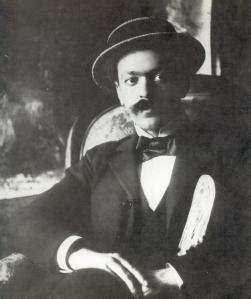
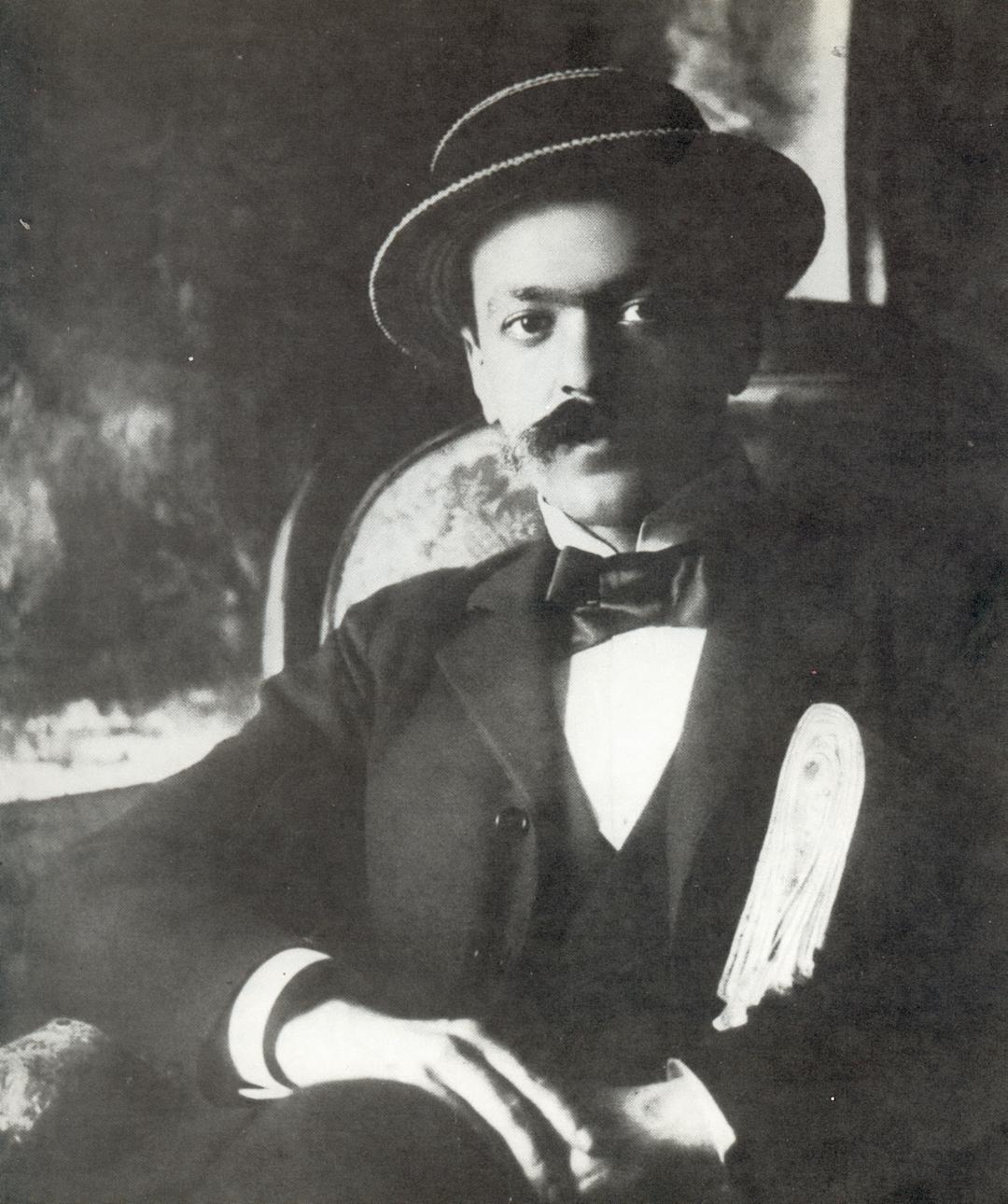
Italo Svevo, looking dapper.

These three are about as diverse as you could imagine. They explore dramatically different era’s regions and themes. Ferrante sets her stories in the poverty of Naples (what a wonderfully mad city) and her quartet of novels span fifty years from 1955 to 2005. Lampedusa explores Siciy between 1860 and 1910 and Svevo‘s novels are set in Trieste in the early 20th Century.

All three writers have fascinating personal stories. Ferrante is Naples born but has never been identified. She writes under a pseudonym. Lampedusa died at the age of 61, a year before his one and only novel, The Leopard, was published in 1958. Italo Svevo only achieved literary recognition and mainstream publication in his sixties (he died in 1928 aged 67). Svevo (born Aron Ettore Schmitz), by coincidence, also wrote under a pseudonym.
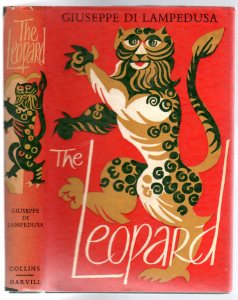
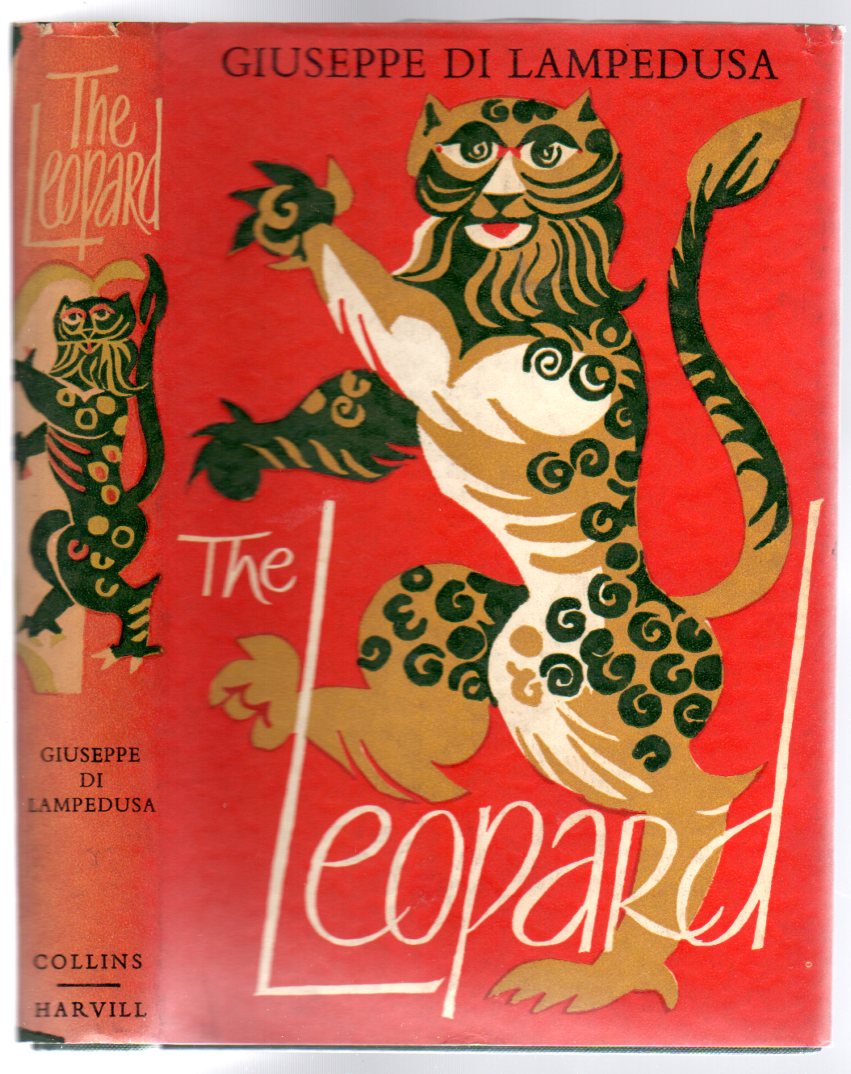
LEOPARD

Lampedusa was the son of an aristocratic family and The Leopard tells the story of the demise of the old ruling class as Italy moves towards a united country in 1860 (Gabaldi has just entered Marsala to begin his campaign). Told with an honesty and an acceptance of the inevitability of change, it tracks the decline of the House of Salina through the eyes of the Prince of Salina and the rise of his nephew, Tancredi, who opportunistically supports the new order and ‘marries down’ in marrying the beautiful peasant Angelica whose family is on the rise, thus securing his future. Written without sentimentality or nostalgia it offers a wonderful insight into power and humanity and to a Sicily still recognizable more than a century later. At its centre it is deeply poetic.

Svevo was also a late bloomer. Of German Jewish background (his mother was Italian), he was born in Trieste in 1861 and married into a business family (industrial paint). He wrote from a young age and self-published a number of novels in his twenties and early thirties but, achieving little success or recognition as an author, he stopped writing and devoted himself to the family business. It was not until his late forties that he again began writing. This occurred as a result of his chance meeting with a young James Joyce who came to live in Trieste as a twenty five year old and whom Svevo engaged to teach him English. Joyce lived and wrote in Trieste over a period of ten years where he completed Portrait of an Artist as a Young Man and began early drafts of Ulysses (Leopold Bloom is said to be based on Svevo). Joyce was long gone by the time Svevo again self-published his novel Zeno’s Conscience in 1923 but it was not until Joyce’s French agent published a translation that it was acclaimed as a comic masterpiece. Svevo died soon after (1928) in a car accident. Described as a pioneer of the psychological novel in Italy, it follows the life of a hapless young man as he stumbles into marriage, infidelity, business, all the time with a preoccupation with his health and death. Written as an account as told to his psychiatrist, it is a gently self revealing portrait of a character in constant conflict with himself. It is packed with wry humour.
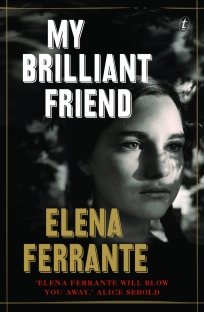
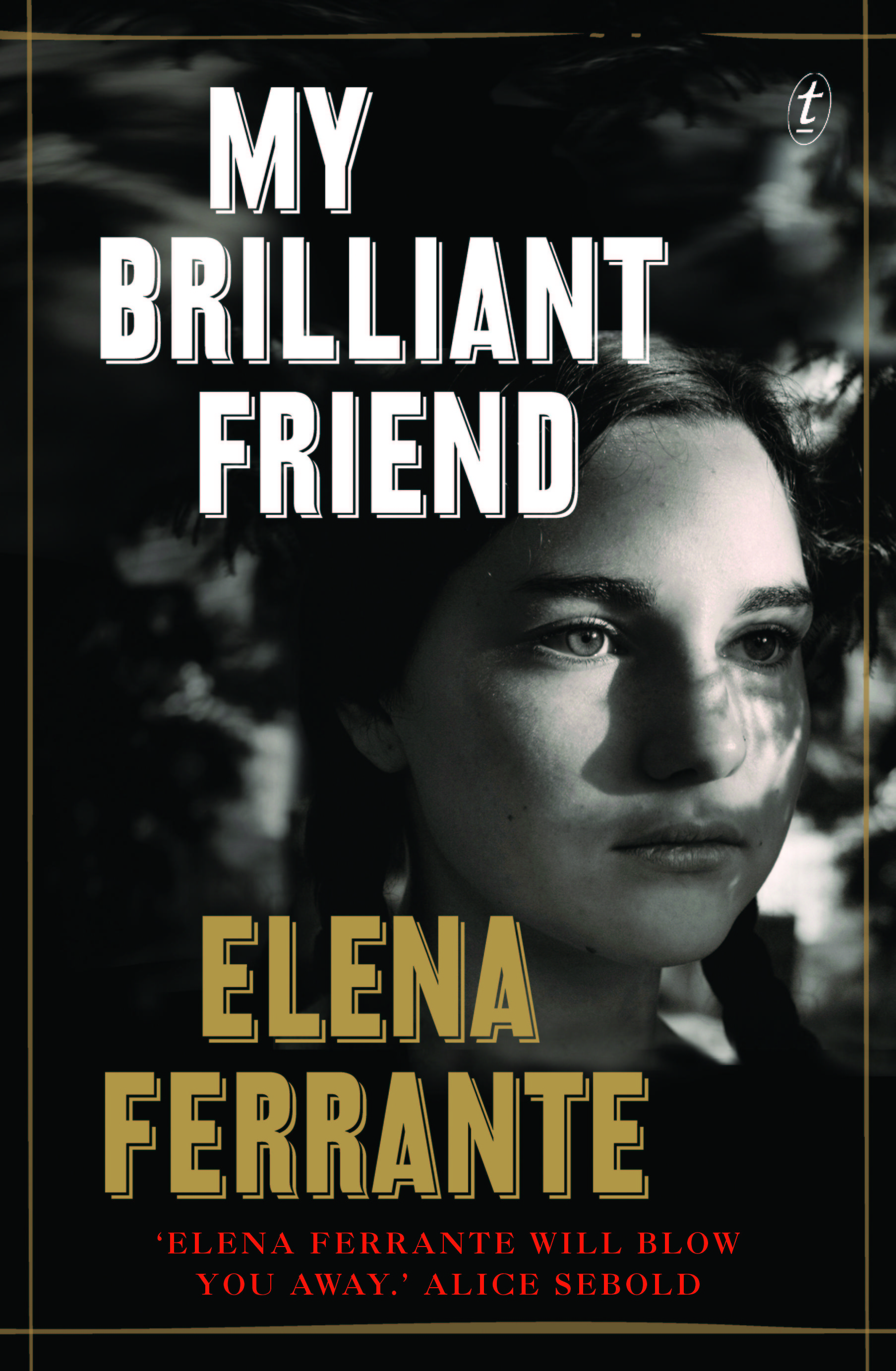
MY BRILLIANT FRIEND
Ferrante, the last of the trilogy of writers, writes about the lives of two friends Lila and Elena, one bright, beautiful and feisty, the other, highly intelligent but in awe of her beautiful friend. Set in the backstreets of Naples in the 1950s My Brilliant Friend is the first of four novels which follow this pair over a fifty year period. One is destined to escape her working class origins, the other becomes a survivor in a harsh social environment dominated by family. The writing in My Brilliant Friend is rich and sensual and beautifully captures the emergence of these two girls as they grapple with the realities of poverty, family and community expectations, and the constraints of gender in their journey towards adulthood and independence. The Italy of the fifties is raw and palpable.
Of course there are many more novels set in Italy – Hemingway’s A Farewell to Arms for one and our own Venero Armanno (The Volcano) another. Italy is such a great country and a country of many great reads.
© Steve Capelin 2015